
In the complex world of shipbuilding project management, there is a silent, invisible cost that bleeds budgets and shatters schedules. It doesn’t appear as a line item on any invoice, yet it can account for up to 30% of your electrical installation labor budget. This is the “International Team Tax”—a heavy premium paid for the friction, ambiguity, and inefficiency inherent in managing diverse, international, and often temporary workforces.

This “tax” is the direct result of an analog management system struggling to cope with digital-era complexity. It’s the cost of language barriers, differing work standards, high staff turnover, and the black hole of paper-based information. It’s the price of rework, the time spent searching for data, and the penalties paid for schedule delays.
For decades, this inefficiency has been accepted as a standard cost of doing business in a globalized industry. But it is not. This tax is entirely optional.
The solution is the eradication of ambiguity. The antidote is a digital, real-time, single source of truth that connects every installer, supervisor, and project manager to the same data, at the same time. It’s a platform that transforms a chaotic, multi-lingual construction site into a streamlined, data-driven operation. This is the core principle behind Cable Pilot, a system designed not just to manage electrical installations, but to eliminate the very inefficiencies that create the “tax” in the first place.
The Anatomy of the 30% “Tax”: Where Inefficiency Hides
To eliminate this cost, you must first understand where it comes from. The 30% “tax” is not a single problem but a cascade of interconnected failures, all rooted in communication. In complex shipbuilding project management, these failures manifest in four primary areas.
1. The “Tower of Babel” Effect: Language and Standards
Modern shipyards are a microcosm of the global economy. It is not uncommon to have a German project manager, a Korean supervisor, a team of Polish installers, and a Romanian quality inspector working in the same block. When the primary tools of instruction are paper drawings and Excel-based cable lists—all written in a single “project language”—the potential for misunderstanding is enormous.
An instruction that is crystal clear to a native English-speaking supervisor may be dangerously ambiguous to a non-native-speaking installer. This ambiguity leads to hesitation, incorrect assumptions, and, ultimately, rework. Installers, fearing they have misunderstood, stop working to find a supervisor for clarification, burning valuable time. Or worse, they proceed with an incorrect assumption, leading to costly errors that must be fixed later.
2. The Black Hole of Analog Data: Paper, Excel, and Email
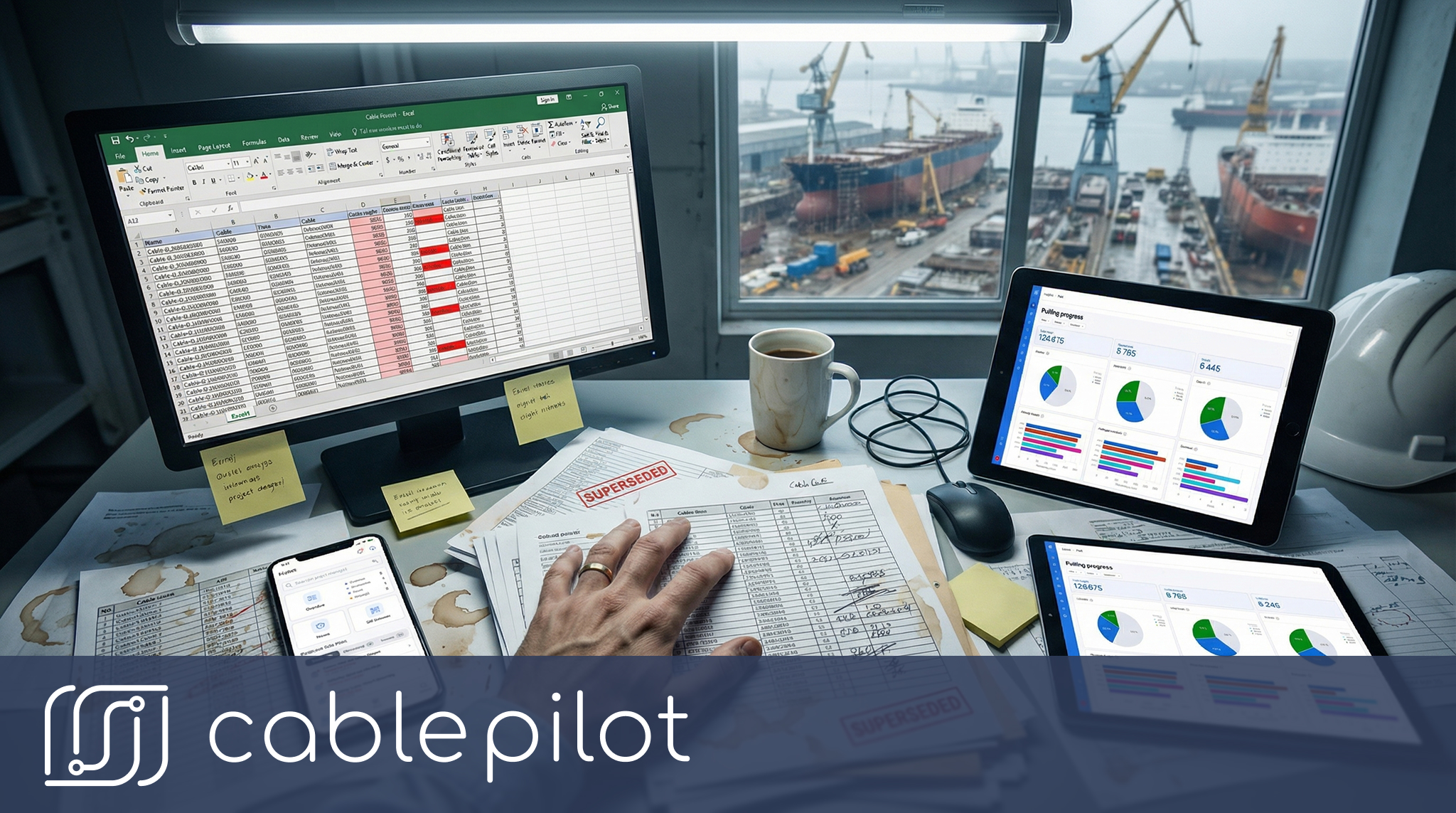
The most significant source of the “tax” is the reliance on outdated information. The typical electrical installation project runs on a collection of disparate, disconnected documents: a master cable list in Excel on a project manager’s laptop, printed task sheets for supervisors, and handwritten notes in an installer’s pocket.
This system is fundamentally broken. The moment a cable list is printed, it is already obsolete. An engineering change, a routing update, or a material substitution instantly invalidates the paper copies circulating on the vessel. The supervisor in area C has no idea that the team in area B just used the last of a specific cable type. The project manager in the office, looking at a progress report from two days ago, makes decisions based on information that is no longer true. This information lag creates a “data black hole” where real-time status is unknown, bottlenecks are invisible until it’s too late, and managing the project becomes a reactive, firefighting exercise.
3. The Revolving Door of Labor: Onboarding and Churn
The shipbuilding industry relies heavily on a flexible, often temporary, workforce. Contractors and subcontractors bring in teams for specific phases of a project, and those teams rotate frequently. Every new installer who steps onto the vessel represents a significant, hidden cost in ramp-up time.
In an analog system, onboarding is a time-intensive, manual process. A new team member must be verbally briefed, shown how to read the project-specific drawings, understand the paper-based reporting system, and learn the physical layout of the vessel. This process can take days, and during that time, their productivity is near zero. This “spin-up” cost is paid over and over again with every new rotation of the workforce, acting as a constant drag on labor effort and project momentum.
4. The High Cost of Ambiguity: Rework and Wasted Labor
These three factors combine to create the most expensive symptom of all: rework. When an installer pulls the wrong cable because the paper list was outdated, or connects to the wrong terminal because the instruction was ambiguous, the cost is not just the time to fix the mistake. It is the cost of diagnosing the problem, the time to un-install the incorrect work, the procurement of new materials, and the cascading schedule delays for every subsequent task that depended on the original work being done right.
This is the 30% “tax” in its most tangible form. It is the labor effort spent doing work for the second or third time. It is the time supervisors spend investigating errors instead of managing progress. It is the pure, avoidable waste born from a system that cannot deliver the right information to the right person at the right time.
The Digital Solution: A Single Source of Truth
The “International Team Tax” is a data problem. Therefore, the solution must be a data-driven one. To eliminate this 30% inefficiency, you must replace the fragmented, analog system with a single, central, digital platform that serves as the “digital twin” for the entire electrical installation.
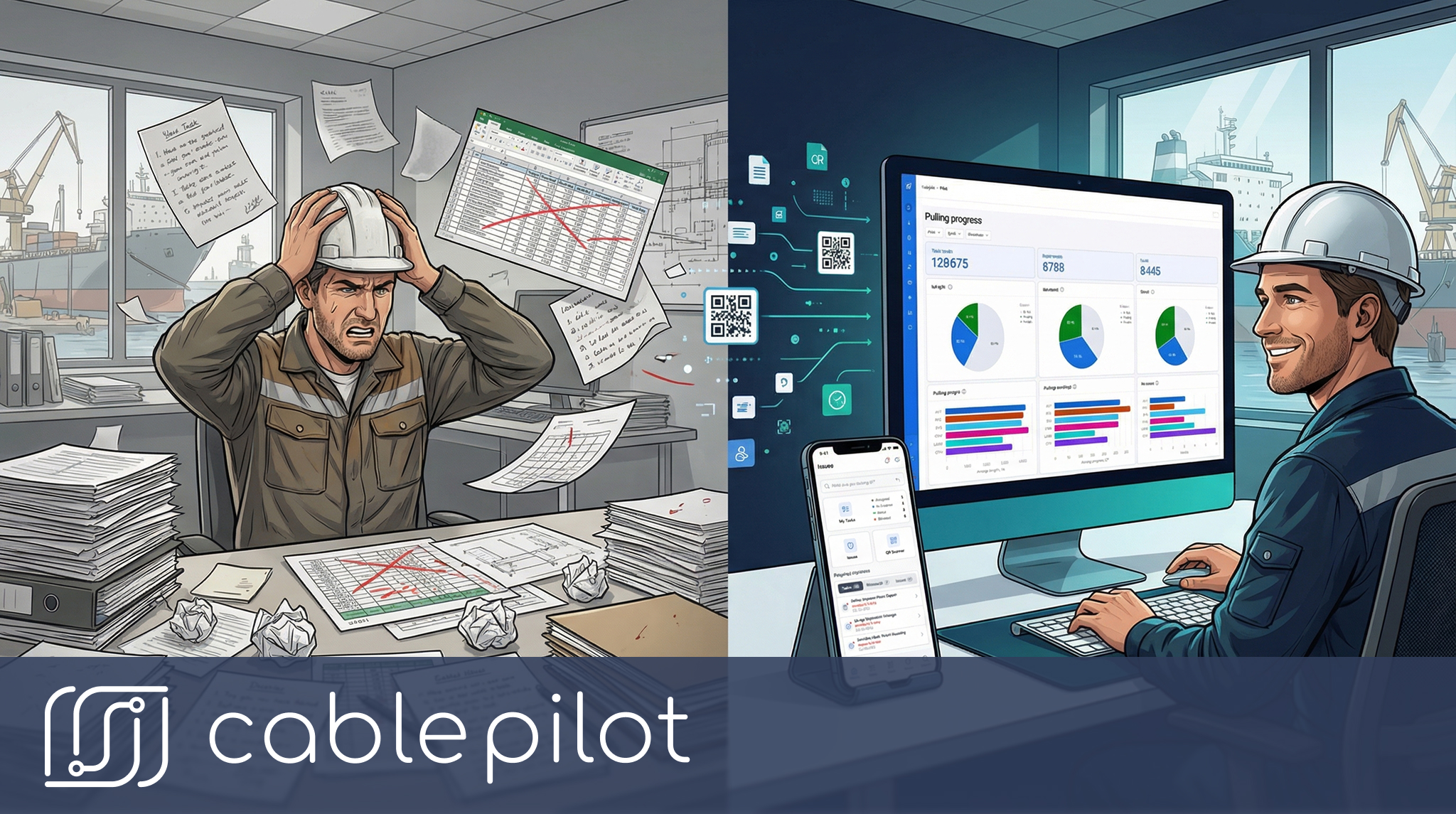
This digital twin is not just a 3D model. It is a live, dynamic database of every component, every task, and every status. It is a single source of truth that is accessible to everyone, from the installer on deck with a smartphone to the project manager in the office with a web browser.
When this single source of truth is established, the dynamics of the project change instantly:
- Clarity replaces ambiguity: Tasks are no longer vague instructions on paper. They are discrete digital work packages assigned directly to an installer, complete with all necessary technical data, in a clear, visual format.
- Real-time data replaces outdated reports: Progress is not reported in weekly meetings. It is captured live, on-site, as it happens. A manager’s dashboard reflects the reality on the vessel right now, not last Tuesday.
- Accountability replaces blame: When every action, status update, and quality check is digitally timestamped and tied to a user, the focus shifts from “who made the mistake” to “what does the data show.” Problems are flagged by the system instantly, allowing for immediate correction.
Cable Pilot in Action: Eliminating the “Tax” at Every Level
Cable Pilot was designed specifically to be this single source of truth and systematically dismantle the four pillars of the “International Team Tax.” It integrates the on-deck installer, the site supervisor, the quality manager, and the project manager into one seamless data ecosystem.
For the Installer on Deck: The Power of the Smartphone App
The root of the “tax” is on-deck confusion. The Cable Pilot smartphone application solves this by delivering absolute clarity directly to the installer.
- Eradicating the “Revolving Door” Tax: A new installer doesn’t need days of training. They are given a smartphone, they log in, and their work is waiting. They can walk into a compartment, scan a pre-installed QR code, and the app will instantly display only the tasks (pulls, installations, connections) required for that specific location. Their first task can be started within minutes of stepping on board, not days.
- Eradicating the “Language Barrier” Tax: The app provides clear, visual instructions. Instead of a dense cable list, the installer sees a simple task: “Install Cable X from A to B.” All technical data is attached. The interface is intuitive, minimizing reliance on written language. The reporting mechanism is a simple tap of a button: ‘Started’, ‘Mounted’, ‘Connected’. This simple, universal action is all that is required to report progress, eliminating the need for handwritten notes or verbal reports.
For the Supervisor and Site Manager: Real-Time Command and Control
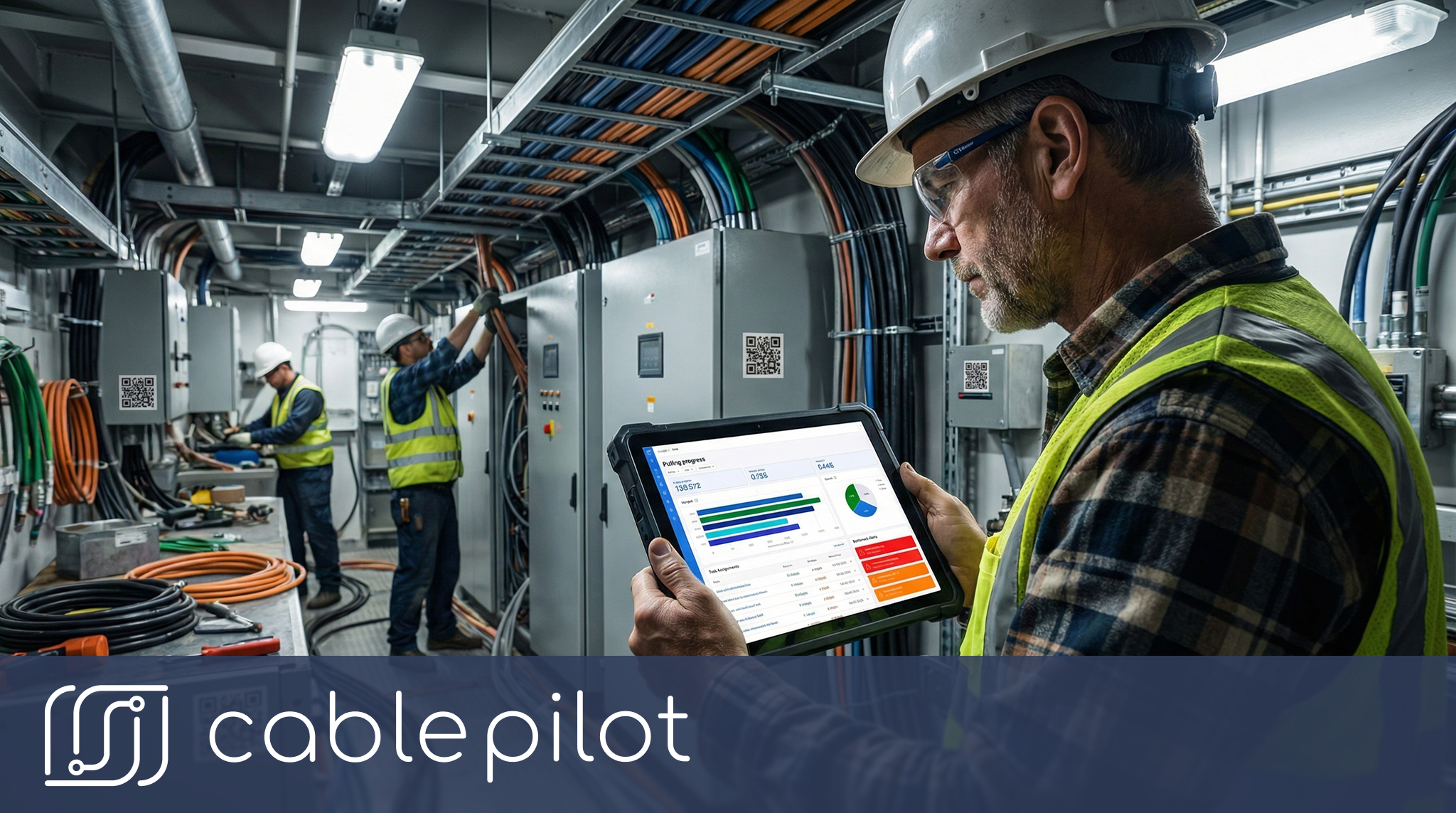
Supervisors stop being information ferries and start being effective managers. The “black hole” of analog data is replaced with a live, web-based dashboard.
- Eradicating the “Information Lag” Tax: A supervisor no longer needs to walk the vessel to “get a feel” for progress. They can look at the ‘Installation Dashboard’ or ‘Connection Dashboard’ and see, in real-time, the status of every task assigned to their team. They see progress by system, location, or installer.
- Managing by Exception: The dashboard instantly flags bottlenecks. The supervisor can see that “Team A” has a high number of ‘Mounted’ statuses but zero ‘Connected’ statuses. This is a clear indicator of a problem. Is there a material shortage? Is a prerequisite task from another team incomplete? Is the quality inspector a bottleneck? The supervisor can now focus their energy precisely where it’s needed, solving problems instead of hunting for them.
For the Quality Manager: Automated Assurance and a Digital Paper Trail
In shipbuilding, quality assurance is paramount, but it is often a source of massive delays and paperwork. The “tax” here is paid in lost check-sheets and time spent proving completion to clients and classification societies.
- Eradicating the “QA Bottleneck” Tax: Cable Pilot digitizes the entire QA/QC workflow. The system can enforce prerequisites—for example, an installer is physically unable to mark a cable as Connected before it has been marked Tested. This automates process compliance.
- Creating an Immutable Record: When an inspector scans a compartment’s QR code, they see a list of all work ready for their review. They inspect the work and tap ‘Checked’ in the app. This creates a permanent, digital, timestamped record of who inspected what, and when. When it’s time for handover to the client, the project manager doesn’t spend weeks gathering a mountain of paper. They export a complete, verifiable digital report in seconds. This radically de-risks the project and accelerates milestone payments.
For the Project Manager and Leadership: Strategic Oversight and Risk Mitigation
Project Managers are finally freed from firefighting and can focus on strategic management. The “tax” they stop paying is the cost of surprises—the sudden, unexpected cost overruns and schedule slips.
- Predictive Management vs. Reactive Reporting: The PM dashboard provides a high-level view of the entire project. Crucially, it tracks planned ‘labor effort’ against actual ‘labor effort’ in real-time. The PM can see immediately if a system is burning hours faster than progress is being made. This is a leading indicator of a construction cost overrun, and it allows the PM to intervene before the budget is broken.
- Data-Driven Decision Making: When a change order comes from the owner, the PM can instantly assess its impact. By filtering the digital twin, they can see exactly how many cables are affected, what their current installation status is, and what the labor effort cost will be to make the change. Gut-feel estimates are replaced with hard data, protecting profits and improving negotiation power.
The Business Case: Reclaiming Your 30%
The “International Team Tax” is not just a drag on efficiency; it’s a direct assault on your profitability. By implementing a single source of truth like Cable Pilot, you are not just buying software—you are buying predictability.

The return on investment is multifaceted and profound:
- Drastic Reduction in Rework: Clear, digital, and always-current tasks eliminate the primary cause of errors.
- Slashed Onboarding Time: New installers become productive in hours, not days, neutralizing the cost of workforce churn.
- Elimination of Administrative Waste: Installers and supervisors stop wasting time on manual reporting. Managers stop wasting time hunting for data.
- Mitigated Financial Risk: A complete, digital audit trail for QA streamlines client handovers and eliminates disputes.
- Enhanced Project Agility: Real-time data allows you to see problems coming and adapt, rather than being hit by surprises.
The 30% “tax” is the cost of ambiguity. It is a choice, not a necessity. By embracing a digital-first approach to shipbuilding project management, you can stop paying this tax. You can replace the friction of international team management with the universal language of clear, accurate, real-time data, and reclaim the 30% of your budget currently being lost in translation.
Discover how Cable Pilot can eliminate the ‘International Team Tax’ on your next shipbuilding project.