
In the high-stakes world of shipbuilding, intuition often suggests that bigger is better – larger contracts, more resources, grander vessels. There’s an underlying assumption that doubling the project scope or the workforce will, perhaps with some added friction, roughly double the challenges but ultimately yield proportional returns. This linear thinking, however, represents a dangerous misunderstanding of the dynamics at play in complex engineering environments like shipyards. As shipbuilding projects grow in size and complexity, they don’t just encounter more problems; they hit a wall of exponentially compounding inefficiencies. This phenomenon is the “scaling trap”: the perilous point where increasing project size generates diminishing, and eventually negative, returns on coordination, efficiency, and overall productivity.
The Paradox of Scale in Shipbuilding
Traditional project management methodologies, often borrowed from less complex industries, fundamentally fail to grasp this non-linear reality. They treat coordination as a manageable overhead, delays as additive inconveniences, data as readily accessible, and meetings as productive necessities. Yet, on the deck of a superyacht or within the intricate blocks of a naval vessel, reality paints a starkly different picture. The sheer number of components, dependencies, teams, and communication lines transforms familiar challenges into potentially project-breaking obstacles.
This article delves into the four key dimensions where the scaling trap manifests most destructively in shipbuilding:
- The Communication Explosion: How coordination complexity spirals mathematically out of control.
- Downtime Cascades: Why delays don’t add up, they multiply.
- Data Hunting in the Haystack: The exponential difficulty of finding critical information.
- Meeting Ineffectiveness: When essential coordination becomes a productivity black hole.
More importantly, we will explore how understanding these exponential pressures reveals the limitations of generic tools and highlights the necessity for purpose-built, object-centric digital solutions designed specifically to navigate and ultimately break the scaling trap in modern shipbuilding project management.
1. The Communication Explosion: Brooks’ Law in the Shipyard
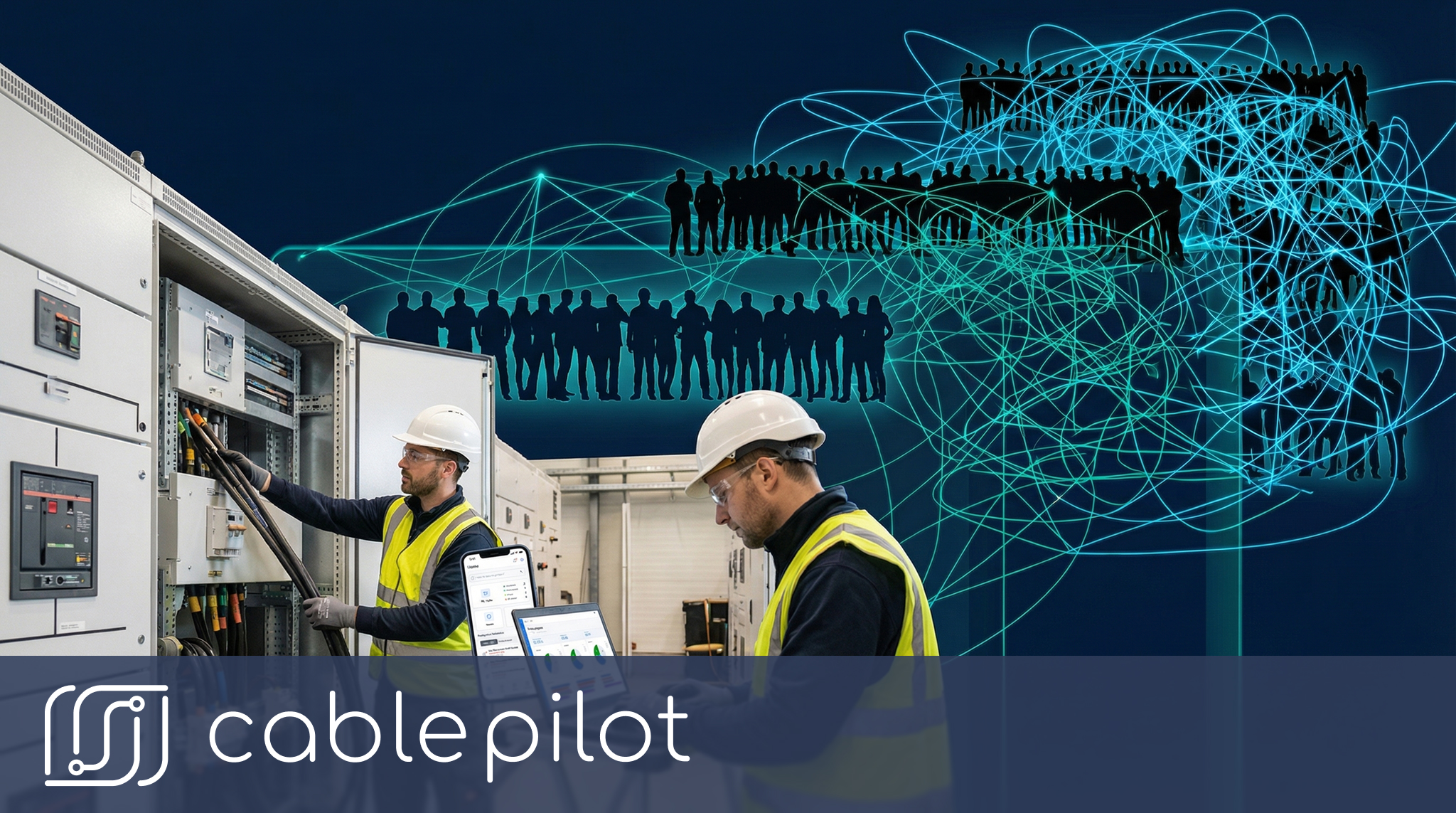
The dream of accelerating a large shipbuilding project by simply adding more personnel often turns into a nightmare of missed deadlines and escalating costs. This counterintuitive reality finds its roots in principles observed decades ago in software engineering but holds even greater significance in the physically constrained and highly interdependent world of shipbuilding. The core issue lies in a mathematical certainty: coordination complexity does not scale linearly with team size; it explodes exponentially.
The Crushing Mathematics of Coordination Overhead
Every time a new person joins a project team, they don’t just add their productive capacity; they add a web of potential communication links. The number of potential communication channels between team members increases according to the formula n * (n-1) / 2, where n is the number of people. Consider the implications:
- A relatively small team of 40 electricians, engineers, and supervisors has 780 potential communication paths to manage.
- Scaling up to a large multi-contractor team of 200 people doesn’t multiply the channels by 5; it causes them to skyrocket to 19,900 potential links.
Each channel represents a potential point of friction: clarification needed, information requested, status update required, potential misunderstanding. Managing this sheer volume of interaction consumes an ever-larger proportion of each team member’s time, diverting effort from actual productive work towards simply staying aligned. This rapidly escalating coordination overhead acts as a mathematical ceiling on the manageable size of a project team using traditional communication methods a ceiling that many shipyards dangerously ignore.
Brooks’ Law: A Maritime Reality
Coined by Fred Brooks in his seminal work “The Mythical Man-Month,” Brooks’ Law states that “adding manpower to a late software project makes it later”. While originating in software, its principles resonate powerfully within shipyard bulkheads. Adding more electricians or fitters to a delayed electrical installation phase introduces several non-linear penalties:
- Ramp-Up Time: New team members need time to understand the project specifics, the vessel’s layout, safety protocols, and existing progress, initially contributing less than their full potential.
- Increased Communication: They must be integrated into the exploding web of communication channels, further taxing existing team members.
- Limited Task Divisibility: Unlike some software tasks, many shipbuilding activities, particularly intricate electrical installations within confined spaces, cannot be easily parallelized beyond a certain point. Adding more hands doesn’t help if only two people can physically work within a specific compartment or on a particular switchboard simultaneously.
The Ringelmann Effect on Deck: Diffusion of Accountability
Beyond the structural complexity of communication, scaling also impacts individual motivation and effort. The Ringelmann effect, observed over a century ago, demonstrates that individual effort tends to decrease as group size increases. Studies have shown that in tasks requiring pooled effort (like rope pulling, analogous to collaborative physical work), individuals in an 8-person group exert only about 49% of the effort they would alone. In large shipbuilding teams, this translates into “social loafing,” where individual accountability becomes diffused. It’s harder to track individual contributions, easier for individuals to feel their specific effort is less critical, and more tempting to rely on others. This isn’t necessarily conscious slacking; it’s a documented psychological phenomenon exacerbated by scale.
The Tangible Cost of Poor Coordination
The consequences of this communication explosion are not merely theoretical. Poor coordination directly leads to tangible waste. Studies indicate that duplicated effort, often stemming from unclear communication or lack of visibility into others’ work, can consume 15-25% of billable time in project-based industries. For a typical electrical contractor working on a large vessel, this could translate into annual losses ranging from $112,500 to $187,500 purely due to coordination failures exacerbated by scale. Furthermore, general research suggests that coordination overhead can increase by 25-40% as team sizes grow, directly eroding productive time.
Shipbuilding faces a unique challenge compared to the software world where Brooks’ Law originated. While software can often be modularized, allowing teams to work somewhat independently on different components, shipbuilding, especially electrical installation, is characterized by tight physical and systemic interdependencies. Cable routes depend on structural completion, equipment placement depends on cable access, system testing depends on multiple components being installed and connected correctly. This forces a high degree of coordination that simply does not scale effectively when reliant solely on human communication channels multiplying exponentially. Ignoring this mathematical reality is the first step into the scaling trap.
2. Downtime Cascades: The Domino Effect That Scales Exponentially
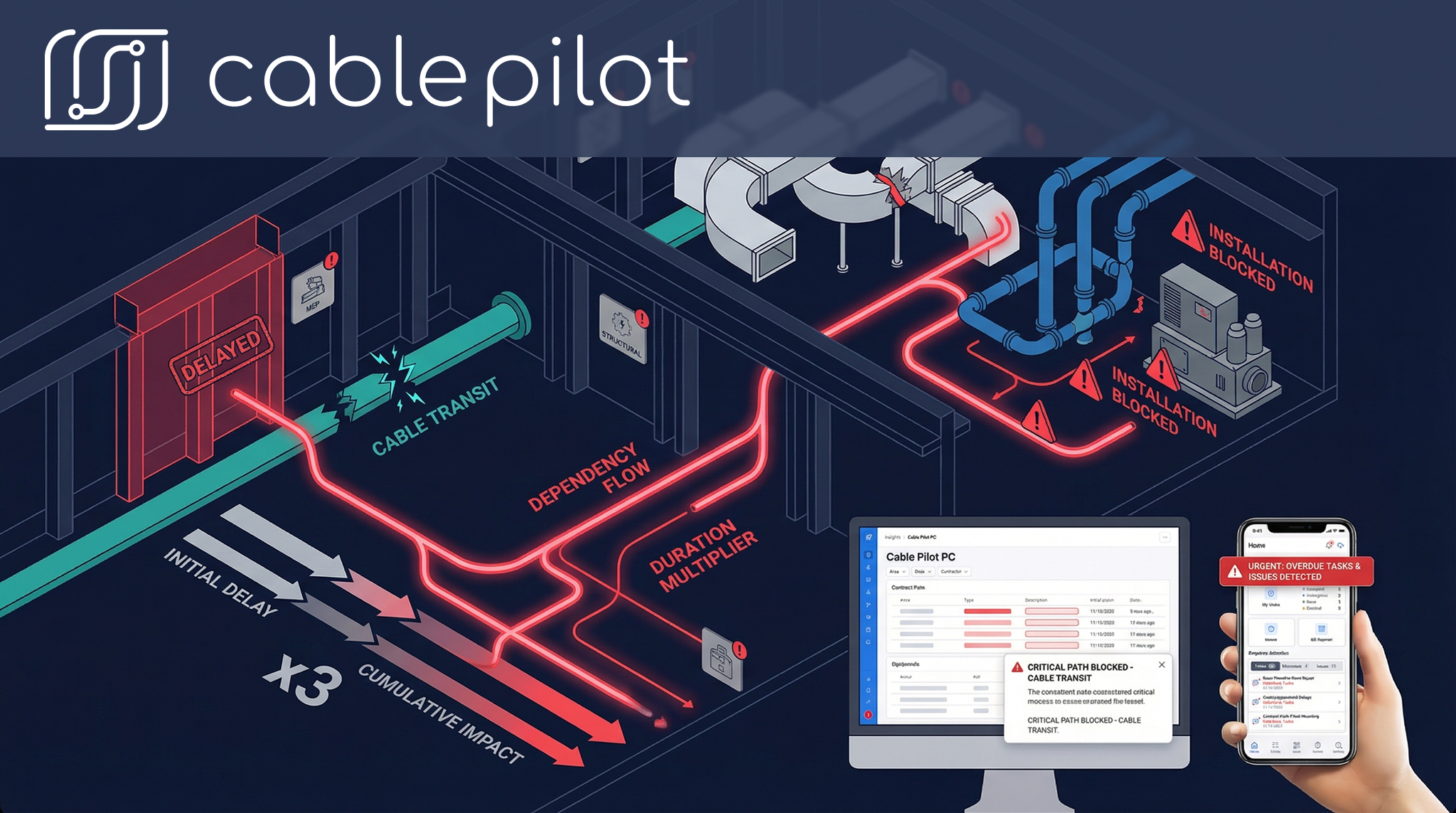
In shipbuilding, delays are often viewed as isolated incidents – a late material delivery, an unexpected design change, a contractor falling behind schedule. The conventional approach is to assess the direct impact and adjust timelines accordingly. However, this linear view drastically underestimates the true nature of delays, especially in large-scale projects. Downtime doesn’t merely accumulate; it propagates and multiplies through complex chains of interdependencies, creating cascading failures that grow exponentially more damaging as project size increases. A single holdup doesn’t just push back one task; it can trigger a domino effect impacting multiple downstream activities, leading to project duration increases far exceeding the initial delay.
The Infectious Nature of Project Delays
Research into large-scale engineering and construction projects confirms the contagious nature of delays. Studies using network analysis and simulation show that a perturbation or delay in a single activity doesn’t remain localized. On average, it can directly impact up to four downstream activities that depend on its completion. Each of those affected activities can, in turn, delay others, creating potentially massive “perturbation cascades” that ripple through the project schedule. Further analysis in lean construction contexts reveals that a single wrong decision or a commitment failure (like not having a prerequisite task completed on time) can initiate delay chains that, on average, extend the total project duration by 10% or more compared to the original plan.
Understanding the Ripple Effect Mechanics
The mechanisms driving these cascades are amplified significantly by the scale inherent in shipbuilding:
- Complexity Amplification: Larger vessels inherently possess exponentially more components, systems, and interdependencies. A modern ship can contain hundreds of thousands of parts. Consider a scenario: an electrical contractor is scheduled to install cabling in a tight auxiliary machinery compartment. However, the HVAC contractor responsible for ducting in the same space is delayed by a week due to a material shortage. This seemingly minor, isolated delay now blocks electrical work. When the HVAC team finally finishes, the electrical team finds that the installed ducting conflicts with the planned cable tray routes documented in drawings that weren’t updated or cross-referenced effectively. This spatial conflict, discovered too late on deck, triggers bitter disputes, urgent redesign requests, further delays for downstream tasks dependent on the electrical work (like system testing), and significant cost overruns for rework. What started as a one-week material delay cascades into weeks of project disruption.
- Spatial Conflicts: Shipyards operate in a constrained 3D environment. Unlike digital projects, physical space is finite and shared. Delays often lead to trade stacking, where multiple contractors try to work in the same area simultaneously, increasing safety risks and drastically reducing productivity. A delay in structural work can prevent bulkhead installation, which in turn prevents cable transit installation, halting cable pulling efforts across multiple systems.
- Resource Allocation Rigidity: Specialized labor and equipment (scaffolding, welding machines, testing gear) are often scheduled tightly. A delay in one area means these resources sit idle or must be rescheduled, potentially impacting other parallel work streams that were relying on their timely availability.
The Escalating Cumulative Cost
The financial impact of these cascading delays is staggering. Downtime rates of 20-30% are unfortunately common in complex construction and shipbuilding projects. This isn’t just idle labor cost; it includes extended equipment rentals, penalty clauses, missed operational revenues for the ship owner, and inflated project management overhead. For contracting companies, particularly those managing multiple large assets or projects, the compounded impact of delays and associated inefficiencies can easily lead to annual losses exceeding $2 million.
Why Size Magnifies the Cascade
Larger, more complex vessels are exponentially more vulnerable to downtime cascades for several reasons:
- Longer Dependency Chains: More systems and components mean longer sequences of tasks where each step depends on the previous one. A disruption early in a long chain has more time and opportunity to propagate and amplify.
- More Parallel Workflows: While seemingly increasing efficiency, having numerous work streams active simultaneously also increases the project’s overall vulnerability. A delay in one critical path can force resources to be diverted, impacting otherwise unrelated parallel tasks.
- Difficulty in Isolation: On a massive vessel, pinpointing the root cause of a delay and isolating its impact before it spreads becomes significantly harder. Information flow is slower, verifying site conditions takes longer, and coordinating corrective actions involves more stakeholders.
The scaling trap, in this dimension, lies in the failure to recognize that the interconnectedness of tasks grows much faster than the number of tasks themselves. Traditional risk management often focuses on individual task delays, missing the systemic risk posed by the exponential potential for cascading failures in large, complex shipbuilding projects. Addressing this requires systems that explicitly map and manage dependencies in real-time.
3. Data Hunting in the Haystack: The Exponential Challenge of Information Retrieval
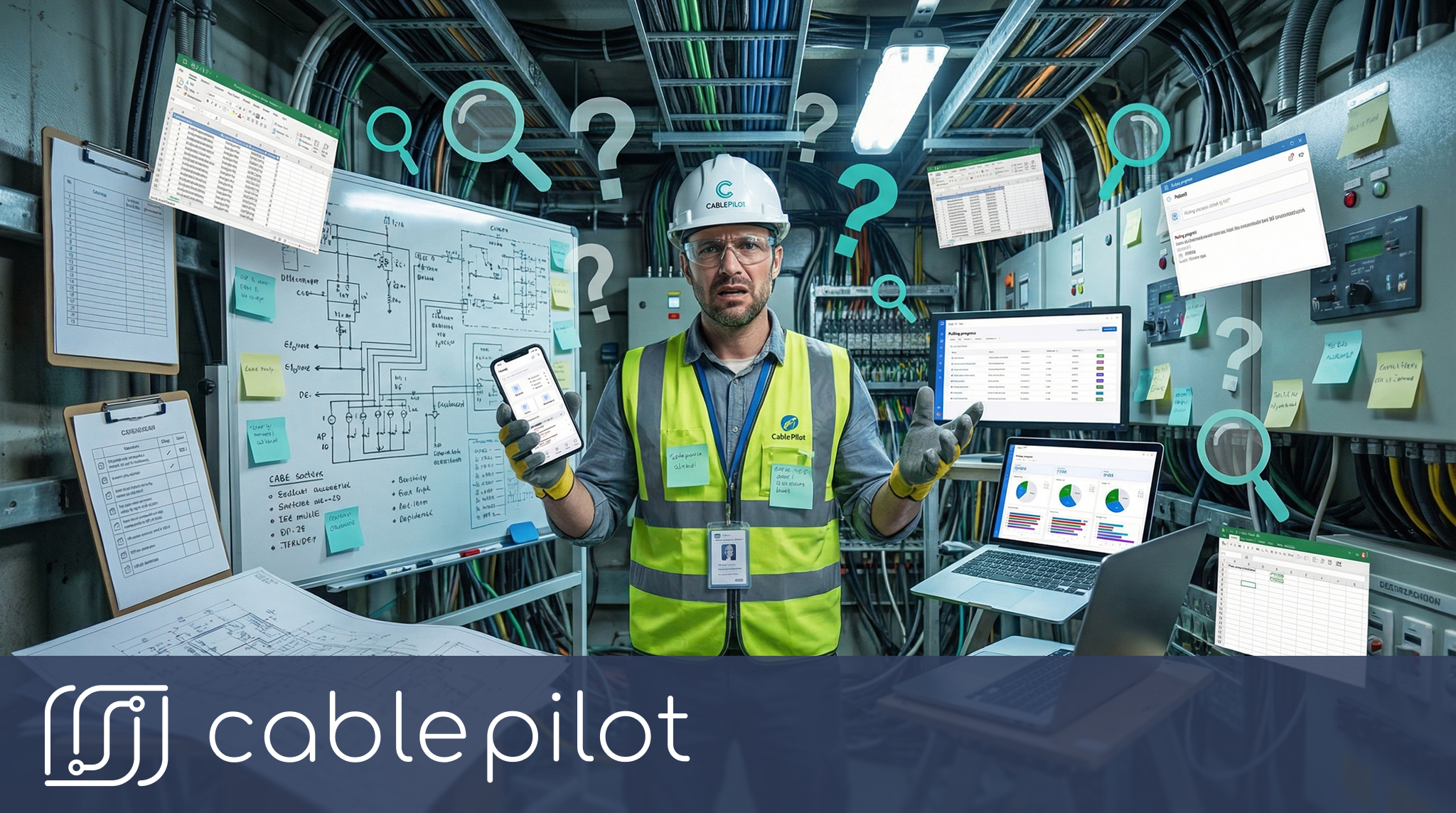
As shipbuilding projects swell in size, involving more teams, components, and suppliers, the seemingly simple act of finding the right piece of information becomes a Herculean task. It’s not just about having more data; it’s about the exponential increase in the complexity of retrieving specific, accurate, and timely information from a vast and fragmented landscape. This “data hunting” consumes valuable time, delays decisions, causes errors, and contributes significantly to the exponential inefficiencies plaguing large-scale shipbuilding. The problem isn’t necessarily a lack of data, but the escalating difficulty of navigating the information haystack as it grows disproportionately larger and more complex.
The Sheer Scale and Fragmentation of Shipbuilding Data
Modern shipbuilding projects are data behemoths. A single complex vessel can involve hundreds of thousands, if not millions, of individual parts, components, and materials. This data originates from a sprawling ecosystem: multiple design offices (hull, machinery, electrical, outfitting), numerous Original Equipment Manufacturers (OEMs), countless suppliers, various subcontractors, classification societies, and the shipyard’s own departments. The data itself is incredibly diverse: CAD models, detailed drawings, cable lists, equipment specifications, purchase orders, installation procedures, test reports, quality assurance forms, progress updates, emails, meeting minutes, and informal communications.
Crucially, this data is often stored in disconnected silos: different software systems, various shared drives, local spreadsheets, email inboxes, and even paper documents. Task-centric or generic project management tools are fundamentally ill-equipped to manage the object-based relationships inherent in shipbuilding. They cannot easily track how a specific cable relates to the two pieces of equipment it connects, the transits it passes through, the system it belongs to, and the tasks associated with its installation and testing. This forces engineers, managers, and technicians to manually cross-reference information across these disparate systems a process that is time-consuming, error-prone, and scales incredibly poorly.
The Mathematics of Search Complexity
Building effective large-scale information retrieval systems, even in purely digital domains, faces exponential challenges. As the size of the data corpus grows, the frequency of updates increases, and the volume and complexity of user queries rise simultaneously, the computational resources and algorithmic sophistication required to deliver relevant results quickly escalate non-linearly. Indexing millions of documents, handling real-time updates from the field, and processing complex queries that span multiple data types (e.g., “Find all test reports for cables connected to equipment X in compartment Y that failed insulation tests in the last week”) becomes exponentially harder.
The Added Physical Dimension
Shipbuilding adds a unique and critical layer of complexity: the physical dimension. Data hunting isn’t just about searching databases; it often involves literal physical searches across a massive, complex, and constantly evolving 3D structure. Finding a specific cable end, locating a piece of equipment needing inspection, or identifying the source of an installation issue requires navigating multiple decks, complex compartments, and dense arrangements of machinery and infrastructure. Without accurate, easily accessible digital information linking components to their precise physical locations, hours can be wasted simply trying to find the object in question.
Change Management Nightmares
The sheer number of parts in a ship, often an order of magnitude greater than in aerospace projects, makes change management exponentially more difficult. A single design modification – changing a cable type, rerouting a pipe, shifting equipment placement – can have far-reaching implications. This change must be meticulously communicated, synchronized, and verified across multiple departments (design, planning, procurement, production), numerous documents (drawings, lists, purchase orders), and various digital and physical systems. Ensuring consistency and preventing errors in this process becomes exponentially harder as the number of components and stakeholders increases.
Issue Resolution Time Spirals
When problems inevitably arise on large projects, identifying the root cause and coordinating a resolution involves navigating a much larger web of dependencies. Tracing an electrical fault might require reviewing drawings, checking installation logs, consulting with multiple contractors, scheduling joint inspections, and obtaining approvals from different departments. Each step involves more potential delays due to stakeholder availability, information retrieval difficulties, and the sheer complexity of the system being investigated. Consequently, issue resolution time doesn’t just increase; it often multiplies as project scale grows.
The Coordination Tax of Poor Data Access
The cumulative effect of these data retrieval challenges imposes a significant “coordination tax” on productivity. Research suggests that poor data accessibility and fragmented systems can lead to 30-50% reductions in productive time, particularly as team and project size increase. Workers spend less time performing value-added tasks and more time searching for information, waiting for clarifications, and correcting errors caused by outdated or inaccurate data. This inefficiency, driven by the exponential complexity of information management at scale, is a core component of the scaling trap. Overcoming it demands a shift towards integrated, object-centric data platforms that provide a single source of truth.
4. Meeting Ineffectiveness: The Black Hole of Stakeholder Dependencies
Meetings are intended to be the crucibles of coordination, decision-making, and alignment in complex projects. However, as shipbuilding projects scale, the very mechanisms designed to foster collaboration often transform into significant drains on productivity. The increasing number of stakeholders, intricate dependencies, and the sheer volume of information to be shared cause meeting effectiveness to deteriorate dramatically. Instead of streamlining progress, meetings in large projects frequently become time-consuming rituals that yield diminishing returns, consuming valuable hours while producing frustratingly few actionable outcomes. This non-linear decline in meeting effectiveness is another critical facet of the scaling trap.
The Stakeholder Multiplication Problem
Larger shipbuilding projects inevitably involve a wider array of specialized contractors (electrical, HVAC, piping, insulation, structural), system suppliers (propulsion, navigation, automation), design firms, classification societies, and client representatives. Each additional stakeholder introduces not only their expertise but also their own priorities, schedules, contractual obligations, and communication styles. This creates a complex web of multi-stakeholder dependencies, where seemingly simple decisions require alignment and input from a much broader group. Changing the location of a major electrical panel might require input from structural engineers, HVAC designers (due to ventilation needs), piping engineers (due to nearby routes), and the outfitting team responsible for the surrounding area. Coordinating these diverse inputs multiplies the effort required for each decision.
When Coordination Becomes the Work
In poorly managed large projects, teams can find themselves spending more time talking about the work in status meetings than actually doing the work. While necessary, excessive meeting time represents a significant opportunity cost. Studies examining professional coordination practices suggest that implementing proper systems and processes can achieve reductions of 30-50% in meeting time, clearly indicating the substantial amount of time currently wasted in ineffective or poorly structured meetings. As project scale increases the number of interfaces between teams, the pressure to hold more meetings grows, often leading to a vicious cycle of decreased productivity fueling the need for even more coordination meetings.
The Alignment Challenge at Scale
Keeping numerous diverse stakeholders informed and aligned becomes exponentially harder as project size increases. Common challenges in multi-stakeholder meetings include:
- Communication Bottlenecks: Ensuring the right information reaches the right people at the right time becomes difficult. Key decisions made in one meeting might not effectively cascade to all relevant parties.
- Scheduling Conflicts: Finding mutually agreeable times for large groups of busy professionals is a constant struggle, leading to delays or poorly attended meetings where key voices are missing.
- Competing Priorities: Different contractors and suppliers naturally prioritize their own tasks and objectives, which may conflict, leading to prolonged discussions and difficulty reaching consensus.
- Information Overload: Presenting updates and discussing issues relevant to dozens of different stakeholders in a single forum can lead to information overload and disengagement from attendees for whom certain topics are irrelevant.
Decision Velocity Plummets
In smaller teams, decisions can often be made quickly with input from a few key individuals. As the number of stakeholders grows, decision-making processes inevitably slow down. More voices need to be heard, approval chains become longer and more complex, and achieving consensus requires significantly more time and effort. Each meeting, therefore, tends to produce fewer concrete, actionable outcomes relative to the time invested. This drop in “decision velocity” acts as a major brake on project progress.
The Meeting Paradox: More Need, Less Effect
Scale creates a paradox: the increased complexity necessitates more coordination, yet each individual meeting becomes less effective. This decline stems from several factors:
- Larger Attendance: More attendees mean less opportunity for individual contribution and discussion. Meetings can devolve into one-way reporting sessions rather than collaborative problem-solving forums.
- More Complex Agendas: Trying to cover issues relevant to a wider range of stakeholders leads to lengthy, unfocused agendas where critical topics may not receive adequate attention.
- Increased Scheduling Difficulty: The sheer logistics of coordinating larger groups consume more administrative overhead.
Shipbuilding’s Forced Interdependencies
Unlike industries where work streams can sometimes proceed more independently, shipbuilding inherently involves strong sequential and spatial dependencies that force multi-party coordination. Electrical contractors cannot finalize their installations until HVAC ducting and piping are in place and structural work is verified. Automation system integration requires collaboration between electrical teams, software engineers, and equipment suppliers. These structural dependencies necessitate frequent meetings involving multiple parties, making shipyards particularly susceptible to the negative effects of scale on meeting effectiveness.
Research explicitly studying coordination overhead confirms this exponential trend. As team size increases, the proportion of time spent purely on coordination grows dramatically, leading researchers to conclude that beyond a certain point, the productivity consumed by coordinating larger teams outweighs the contribution of the additional members. The principle holds: a well-connected, efficiently communicating team of 40 often outperforms a fragmented group of 200 individual experts working in isolation. The limiting factor becomes the quality and efficiency of the connections, not the quantity of personnel. Escaping this aspect of the scaling trap requires fundamentally changing how coordination occurs, shifting reliance from synchronous meetings to asynchronous, data-driven platforms.
5. Breaking the Scaling Trap: Cable Pilot’s Object-Centric Solution
The exponential growth of inefficiency in large shipbuilding projects—driven by communication overload, cascading delays, data retrieval complexity, and meeting ineffectiveness—is not an insurmountable law of nature. It is, however, a reality that cannot be overcome by simply applying more resources or using generic project management tools that fail to understand the unique physics of shipbuilding. Escaping the scaling trap requires a fundamental shift in approach, moving away from human-dependent coordination and task-centric views towards digital platforms specifically architected for the object-centric, spatially complex, and highly interdependent reality of ship construction. Cable Pilot embodies this shift, offering a purpose-built solution designed to replace coordination chaos with system-enforced logic and real-time data visibility.
The Fundamental Shift: From Tasks to Objects
Traditional project management often focuses on tasks listed in schedules. While important, this view misses the core of shipbuilding: the physical objects themselves—cables, equipment, compartments, transits—and their intricate relationships. Generic PM tools struggle to model how pulling Cable C-101 depends not just on Task A being complete, but on Equipment E-05 being mounted, Transit T-23 being sealed correctly, and Compartment Z-4 being accessible.
Cable Pilot adopts an object-centric paradigm. It understands that a cable is not just an item on a list, but a physical entity with a defined route, specific connection points, required segregation protocols, dependencies on other objects (equipment, structures, other services), and a lifecycle spanning multiple stages (pulled, tested, connected, approved). By modeling the project around these objects and their relationships, Cable Pilot transforms project management from a static planning exercise into a dynamic simulation of the vessel’s construction.
System-Enforced Logic Replacing Human Bottlenecks
Cable Pilot leverages this object-centric understanding to automate and enforce coordination, directly addressing the inefficiencies outlined previously:
- Automated Quality Gates: Instead of relying on supervisors manually checking prerequisites or contractors declaring readiness based on incomplete information, Cable Pilot implements system-enforced quality gates. A task like “Connect Cable C-101” cannot be marked as ready or started unless the system verifies that all its defined dependencies are met: the cable is pulled and tested, the target equipment is mounted, the required drawings are available, and no active blockers exist. This eliminates costly false starts, prevents premature stage completion, and drastically reduces rework caused by missed prerequisites. It replaces error-prone human checklists with reliable system logic.
- Real-Time Single Source of Truth: Forget hunting through spreadsheets, emails, and outdated drawings. When an electrician scans a cable’s QR code on their smartphone and updates its status to “Pulled,” that information propagates instantly across the entire platform. Project managers see updated dashboards, quality inspectors see the revised status, and subsequent tasks dependent on this cable are automatically notified or unlocked. This single-scan, real-time data flow eliminates information lag, drastically cuts down data hunting time, ensures all stakeholders work from the same up-to-date information, and provides unparalleled visibility into actual progress on deck.
- Intelligent Dependency Management: Cable Pilot automatically tracks the complex web of relationships between objects. It understands which cables connect to which equipment terminals, ensures compliance with mandatory segregation rules based on cable types and routes, and monitors the lifecycle stage of every component. This eliminates reliance on human memory or manual cross-referencing, which breaks down rapidly at scale. The system manages complexity far more effectively than any human team could.
- Proactive Risk Detection & Cascade Prevention: By continuously monitoring dependencies and prerequisites, Cable Pilot acts as a “digital watchman”. If a required piece of equipment is delayed or fails inspection, the system automatically flags all dependent cables and tasks, highlighting the potential downstream impact before it causes a cascade. Instead of reacting to delays after they’ve occurred, managers can proactively identify risks and mitigate them, preventing the exponential disruption caused by downtime cascades.
- Spatial Intelligence (Implicit): While the plan doesn’t detail 3D model integration, an object-centric system inherently understands location (compartment, deck, area). This spatial awareness, linked to equipment and cable data, allows for better coordination, preventing physical clashes and optimizing work sequencing in congested areas – conflicts that often arise late in traditional processes.
- Streamlined Data Integration with AI: Recognizing that cumbersome data migration is a major barrier to digital adoption, Cable Pilot incorporates intelligent data import capabilities. AI-powered tools can help parse and map data from various formats (like complex cable lists in spreadsheets), significantly reducing the initial setup effort and debunking the myth that digital transformation must be prohibitively painful.
Scalability by Design
The crucial difference lies here: generic project management tools, reliant on manual updates and task-based views, become less effective as project complexity increases. Their performance degrades precisely when coordination challenges are highest. Cable Pilot, being purpose-built for shipbuilding’s object-centric nature and leveraging automation, is designed to maintain its effectiveness and deliver increasing value as project scale and complexity grow. It thrives in the complex environment that cripples traditional approaches, fundamentally breaking the scaling trap by replacing overburdened human communication with efficient, reliable system logic.
Conclusion: Size Is Destiny—Unless You Change the Rules
The journey through the complexities of large-scale shipbuilding projects reveals a stark truth: size is not just a multiplier of challenges, it is an exponent. The intuitive linear scaling expected in simpler domains breaks down catastrophically in the shipyard environment. Coordination overhead doesn’t just grow, it explodes. Delays don’t just add up, they cascade and multiply. Finding critical data becomes exponentially harder in a sea of fragmented information. Meetings intended for alignment devolve into sinks of unproductive time. This is the scaling trap – a vortex of compounding inefficiency driven by mathematical realities that traditional project management methods are fundamentally unequipped to handle.
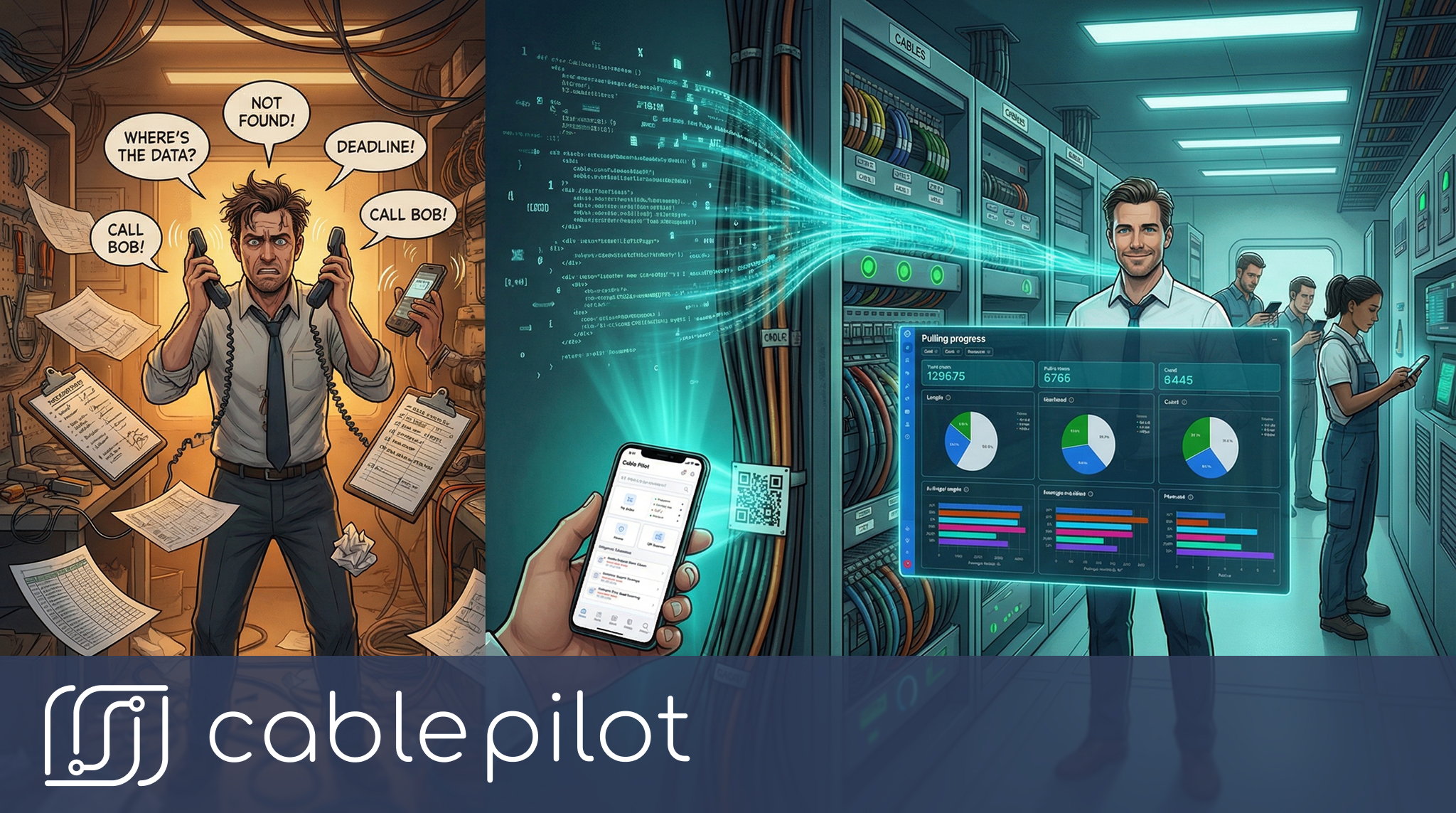
Trying to manage a modern, complex vessel construction with generic spreadsheets, disconnected task managers, and endless coordination meetings is akin to navigating treacherous waters with outdated charts. These traditional approaches inevitably hit a complexity ceiling, beyond which adding more resources yields diminishing returns and projects spiral into delays and cost overruns. The exponential nature of the challenges demands an exponential leap in management capability.
This is not just an operational issue; it is a critical competitive imperative. Shipyards burdened by the inefficiencies of the scaling trap will struggle to deliver complex projects on time and budget. Those that embrace and master large-project coordination through specialized digital platforms, specifically designed for the object-centric reality of shipbuilding, will gain a decisive advantage. They will achieve greater predictability, higher quality, reduced costs, and faster delivery times – essential factors for survival and success in the global shipbuilding market.
The path forward is clear, though it requires a departure from outdated practices. Escaping the scaling trap necessitates adopting technologies that understand and tame exponential complexity. Object-centric platforms that model the physical asset, automated dependency tracking that replaces manual oversight, real-time data flow that eliminates information silos, and system-enforced quality gates that prevent errors before they happen – these are not luxury additions, but essential tools for navigating the complexities of modern shipbuilding.
Ultimately, the question facing shipyards today is not whether to digitize their project management processes, but how. Will they continue to wrestle with generic solutions designed for simpler domains, inevitably succumbing to the exponential pressures of the scaling trap? Or will they adopt purpose-built platforms like Cable Pilot, tools architected from the ground up to understand shipbuilding’s unique reality and empower teams to build bigger, better, and faster, turning the challenge of scale into a manageable, predictable process? The future competitiveness of the industry hinges on making the right choice.
Don’t let exponential complexity sink your next project. Discover how Cable Pilot’s object-centric platform helps shipyards break free from the scaling trap. Request a personalized demo today.