
Shipbuilding quality assurance challenges demand your immediate attention when implementing a robust quality management system: Your construction process control plan says a task is ready. Your gut says it isn’t. Who do you trust?
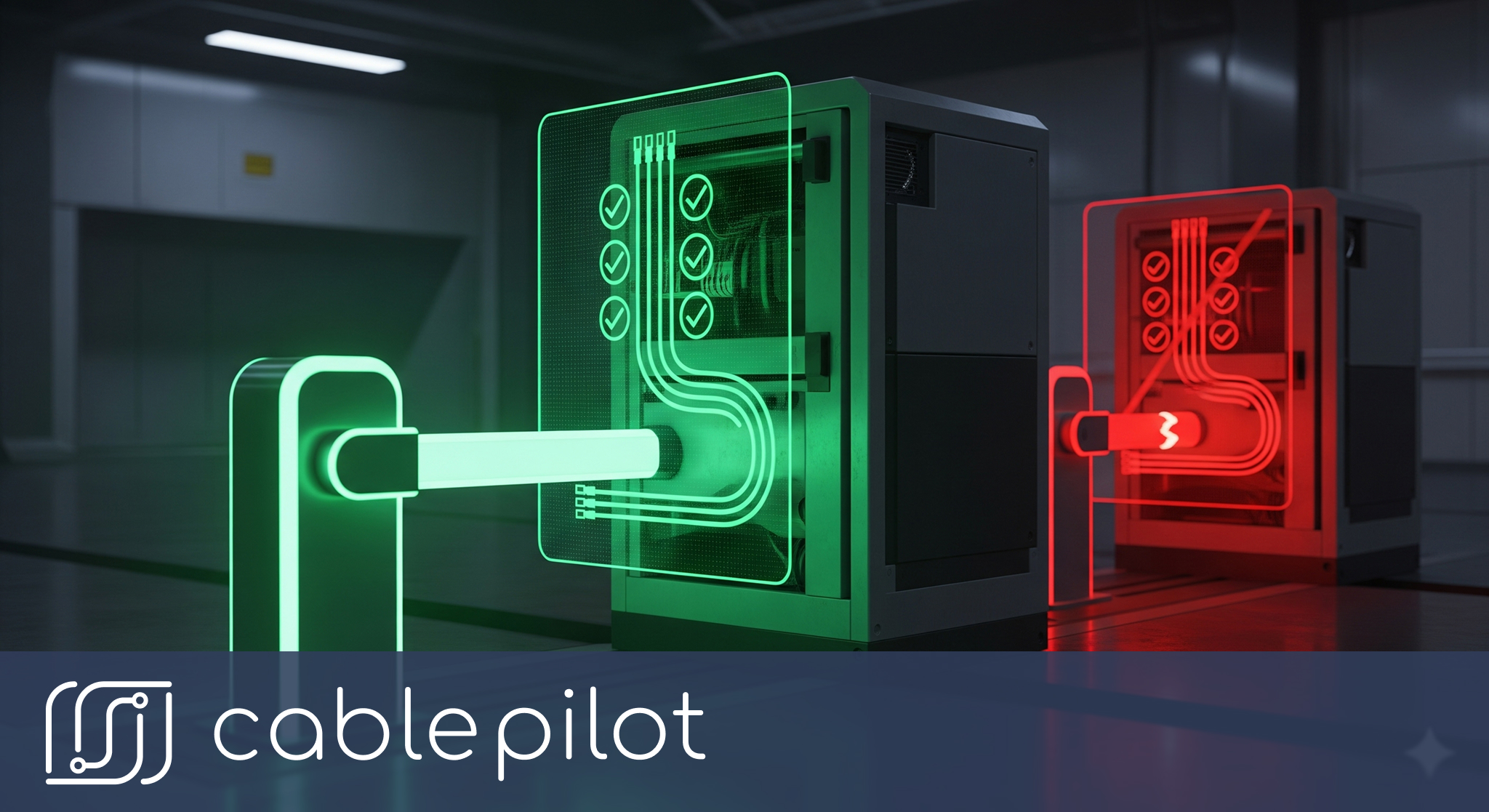
This isn’t a trick question. It’s a scenario that represents one of the most insidious and costly risks in modern shipbuilding quality assurance: the illusion of completion. Under pressure to meet deadlines, a Site Manager, relying on a verbal report from a busy foreman, declares a switchboard ready for quality inspection. The inspector spends hours performing their checks, only to discover at the final moment that a critical power cable is still missing.
The consequences are immediate and expensive for any quality management system. The inspector’s time is completely wasted. The commissioning team, scheduled to power up the system, is now idle. And a simple mistake, born from the impossibility of manually tracking hundreds of dependencies in construction process control and shipbuilding quality assurance processes, has now created a significant delay and eroded trust in the project’s workflow.
For the Design Engineer, this is more than a delay; it’s a violation of the core construction process control methodology. For the Project Manager implementing a quality management system, it’s a direct hit to the budget and schedule that impacts overall shipbuilding quality assurance performance.
The problem isn’t a lack of diligence; it’s the reliance on human memory in an environment too complex for it to manage. The solution is to build a “digital watchman” directly into your project’s operating system—a system that doesn’t rely on memory and is incapable of making a mistake. This advanced shipbuilding quality assurance approach uses automated system flags, based on predefined rules, to act as an infallible quality gate, physically preventing premature stage completion and transforming shipbuilding quality assurance from a reactive, manual process into a proactive, automated discipline.
The Diagnosis: The High Price of “Almost” Done
Modern shipbuilding quality assurance systems require comprehensive approaches to maintain the highest construction standards. According to the International Marine Organization, effective quality management systems in shipbuilding must integrate automated monitoring with traditional inspection protocols. Understanding these principles is essential for implementing robust shipbuilding quality assurance programs that meet international maritime safety standards.https://www.imo.org/en/OurWork/Safety/Pages/ShipbuildingStandards.aspx
In the complex web of shipbuilding, the phrase “it’s done” is dangerously ambiguous. Does “done” mean all the primary work is finished? Mostly finished? Or 100.0% complete according to the project specification? When the definition of “done” is left to human interpretation under pressure, errors are not just possible; they are inevitable.
The root of the problem is the sheer scale of dependencies. A single distribution panel might have hundreds of cables connected to it. A Site Manager, no matter how experienced, cannot possibly keep the live status of every single connection in their head. They are forced to rely on manual checks, checklists, and verbal confirmations from their teams—all of which are fallible.

Let’s trace the financial impact of a single premature “ready” signal:
- The False Declaration: A foreman, having seen his team connect dozens of cables to a switchboard, tells the Site Manager, “We’re finished with the IAMCS cabinet.”
- The Wasted Inspection: The Site Manager, trusting this report, assigns a Quality Inspector to the task. The inspector spends three hours meticulously checking the installation.
- The Late Discovery: At the end of the inspection, the inspector cross-references the final drawing and discovers one small but vital control cable was never connected.
- The Cascade of Costs:
- Wasted Labor (Inspector): 3 hours of a highly-skilled inspector’s time are lost.
- Wasted Labor (Installer): An electrician must now be pulled from another task to go back and connect the single missing cable.
- Idle Time (Next Stage): The commissioning team, scheduled to begin power-up tests, is now on standby, unable to proceed.
- Rework: The entire inspection process must be repeated from the beginning to ensure the new connection was made correctly and didn’t impact other components.
This cascade is triggered by a single, understandable human error. But in a system that allows such errors to go unchecked, these costs multiply across the entire project, creating a constant drag on efficiency and profitability. Effective shipbuilding quality assurance must prevent such cascading failures through systematic controls.
The Turning Point: When the System Becomes the Authority
The only way to solve this problem is to remove the possibility of human error at this critical juncture. You need to take the responsibility of declaring “100% complete” out of human hands and give it to the only entity that can verify it with absolute certainty: the data system itself.
This is the principle behind automated system flags.
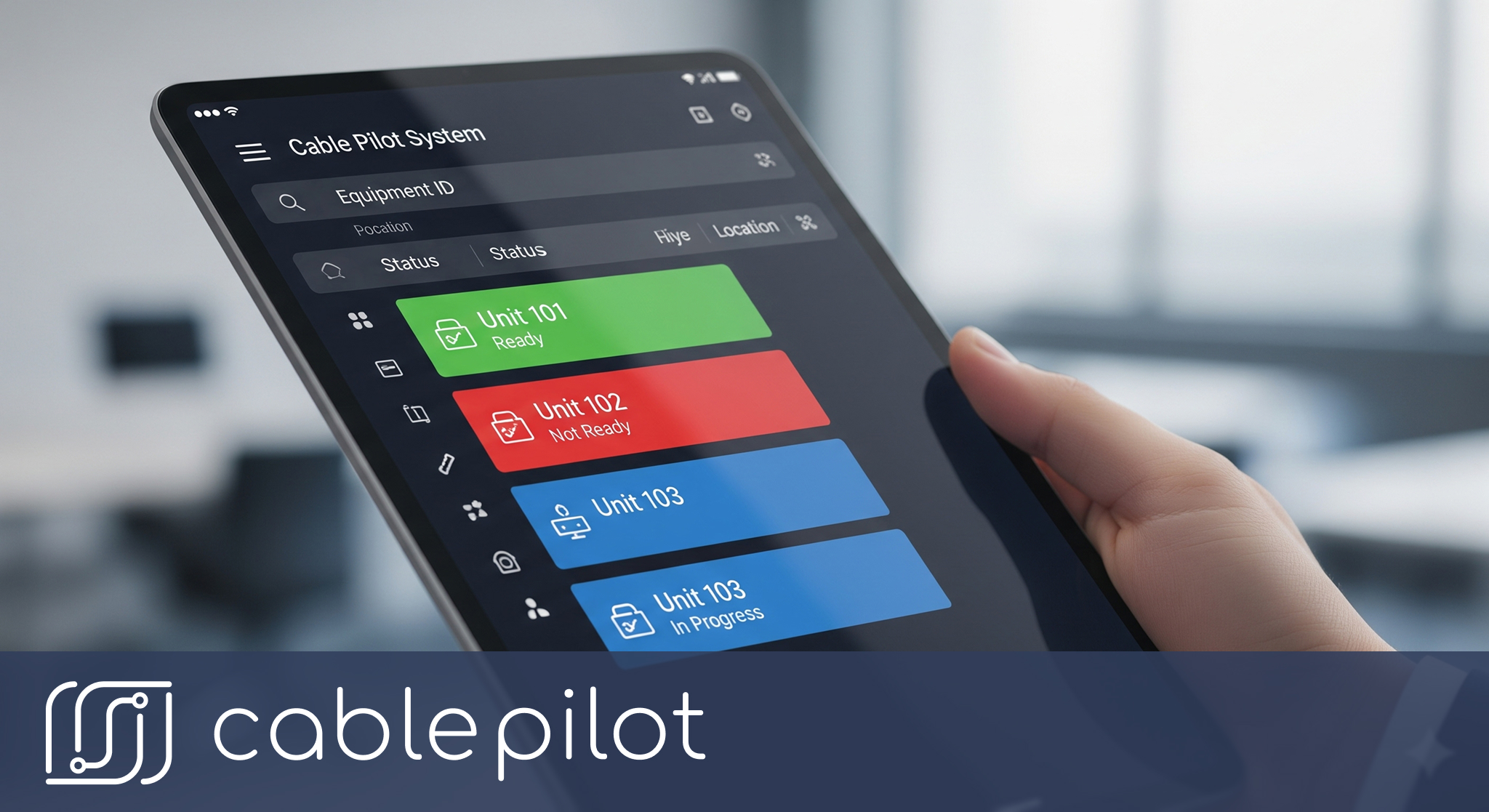
An automated flag is not a status that a user can manually select. It is a status that the system grants to an object (like a piece of equipment) only after a strict, predefined set of rules has been met. It acts as an unblinking, infallible watchman that guards the integrity of your workflow.
The core logic is simple but powerful:
“This equipment cannot be considered ‘Ready for Inspection’ until the system verifies that 100% of its required dependencies are complete.”
You are no longer asking people to follow a rule; you are embedding the rule into the digital fabric of the project.
How the Digital Watchman Works: An Automated Quality Gate
Let’s see how this system-enforced discipline prevents the costly error from our example.
The Rule:
Within the project platform, the Design Engineer or Project Manager sets a simple, powerful rule for equipment IAMCS cabinet:
- Condition: The status of ALL 12 cables linked to IAMCS cabinet in the digital twin must be “Terminated.”
- Action: If the condition is met, automatically change the flag on IAMCS cabinet to “All Cables Connected.”
The Process in Action:
- Work in Progress: Over the course of the day, installers connect 11 of the 12 required cables. Using their mobile devices, they scan the QR codes on each cable and update their statuses to “Terminated.”
- The System Waits: After each scan, the system checks the rule for IAMCS cabinet. It sees that only 11 of the 12 conditions have been met. The status of IAMCS cabinet remains unchanged: “Awaiting Connections.” The Site Manager, looking at his dashboard, can see at a glance that the work is not yet 100% complete. He cannot prematurely assign an inspector.
- The Final Connection: At 4:15 PM, an installer connects the 12th and final cable and updates its status to “Terminated.”
- The Automatic Trigger: The moment this final piece of data hits the system, the digital watchman acts. It re-evaluates the rule for IAMCS cabinet, confirms that all 12 dependencies are now satisfied, and instantly and automatically changes the equipment’s flag to “All Cables Connected.”
No human needed to remember anything. No checklist was required. The system itself has acted as the quality gate, guaranteeing that the “Ready” status is not just a claim, but a verifiable fact.
The Ripple Effect: A Cascade of Confidence
This automated validation doesn’t just prevent one error; it builds a foundation of trust and efficiency that spreads throughout the entire project workflow.

For the Quality Inspector:
The inspector’s worklist is now a source of truth. When she sees that the IAMCS cabinet has the “All Cables Connected” flag, she knows with 100% certainty that it is ready for her expertise. She no longer wastes time traveling to unprepared worksites or performing partial, useless inspections. Her time is maximized, and her work adds immediate value.
For the Site Manager:
The Site Manager is freed from the burden of microscopic verification. He doesn’t need to personally check if every single cable is connected. He can trust the system. The dashboard becomes his reliable planning tool. A green flag next to IAMCS cabinet is an unambiguous signal that he can confidently schedule the next phase of work, whether it’s inspection, testing, or commissioning.
For the Project Manager:
At the highest level, the Project Manager gains confidence in the integrity of the entire process. He knows that the project’s progress is not just being claimed; it’s being systematically verified at every critical step. This built-in quality control reduces project risk, improves the accuracy of forecasts, and provides a solid, defensible record of procedural compliance for the client.
Conclusion: From Process Police to Digital Guardian
Ultimately, automated system flags are more than a clever feature. They are your project’s digital guardian. This system works 24/7, never gets tired, and cannot be distracted. Its only job is to enforce the rules you’ve defined, ensuring the proper sequence of work is followed with perfect discipline.
It transforms quality management from a reactive, manual policing activity into a proactive, system-enforced guarantee. By embedding intelligence into your workflow, you’re not just preventing errors; you’re building a foundation of operational excellence and creating an environment where your team can innovate, secure in the knowledge that the system is watching their back.
Modern shipbuilding quality assurance depends on this level of systematic control to maintain industry standards and prevent costly rework.
Want to ensure your project’s quality is enforced by the system, not just checked by people? Learn more about automated workflows and system flags.
Pingback: 7 Ways Cable Pilot's Single Source Of Truth Transforms Work