
Modern shipbuilding projects involve thousands of cables, dozens of contractors, and multiple work zones operating simultaneously. For project managers and superintendents overseeing electrical installations, maintaining visibility across this complexity has traditionally meant endless site walks, countless status meetings, and relying on outdated spreadsheets that fail to reflect current reality. The consequence? Reactive decision-making, delayed responses to bottlenecks, and compromised schedule compliance.
Cable Pilot fundamentally transforms this paradigm by serving as the central nervous system for electrical installation projects. Through real-time dashboards powered by instant field data capture, shipbuilders gain unprecedented installation visibility that turns reactive management into proactive coordination. This article explores how Cable Pilot’s dashboard technology revolutionizes cable progress monitoring, enabling data transparency that drives workflow optimization and delivers measurable improvements in project coordination.
The Data Chaos Challenge in Shipbuilding Electrical Projects
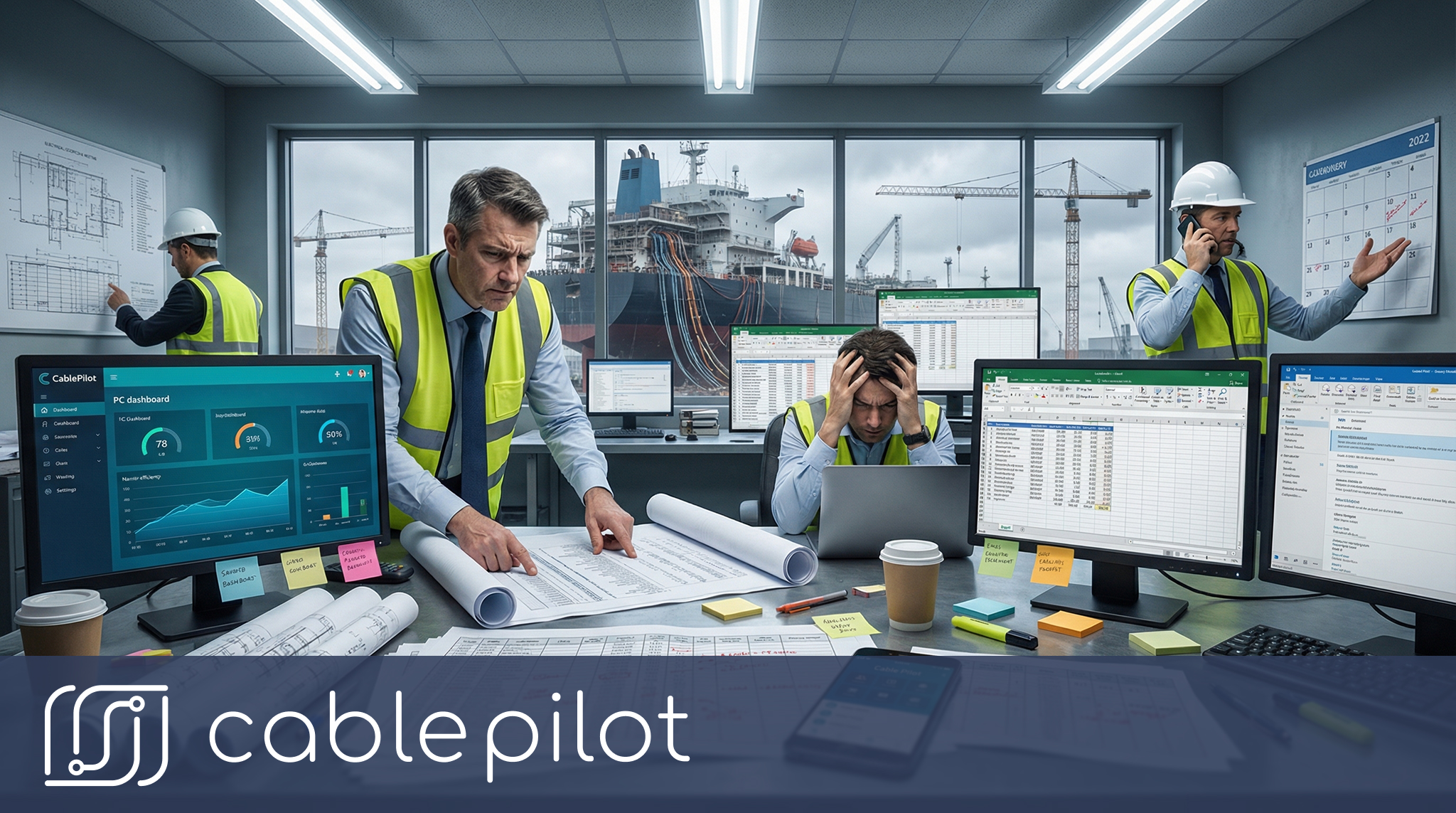
Electrical installation represents one of the most intricate and labor-intensive phases of vessel construction. A single modern cruise ship may contain over 500,000 cables spanning multiple decks, systems, and operational zones. Traditional monitoring methods create fundamental visibility gaps:
Fragmented information sources: Installation data exists across contractor notebooks, foreman clipboards, Excel files on different computers, and verbal updates in morning meetings. No single source of truth exists.
Time lag in reporting: Even with diligent daily reporting, there’s typically a 24-48 hour delay between work completion and data reaching project management. Decisions get made based on yesterday’s reality.
Limited granularity: Weekly progress reports show percentage completion by discipline or area, but lack the detail needed to identify specific bottlenecks or quality issues emerging at the cable level.
Manual aggregation burden: Project coordinators spend hours collecting data from multiple sources, consolidating spreadsheets, and generating status reports—time that could be spent solving problems rather than documenting them.
Contractor accountability gaps: Without objective, timestamped evidence of work completion, disputes arise about progress claims, rework responsibility, and schedule delays.
This data fragmentation forces project managers into reactive mode. By the time a bottleneck becomes visible in traditional reporting, it has already impacted downstream activities. The installation testing crew arrives to find cables not yet pulled. The commissioning team discovers termination quality issues only during system energization. Schedule recovery becomes constant crisis management.
Cable Pilot addresses these fundamental challenges by creating a unified digital ecosystem where every cable status update captured in the field instantly flows into comprehensive dashboards accessible to all stakeholders.
How Cable Pilot Captures and Visualizes Real-Time Data
The power of Cable Pilot’s real-time dashboards begins with effortless data capture at the point of work. The system eliminates the traditional gap between execution and visibility through two core mechanisms:
QR Code Scanning for Instant Status Updates
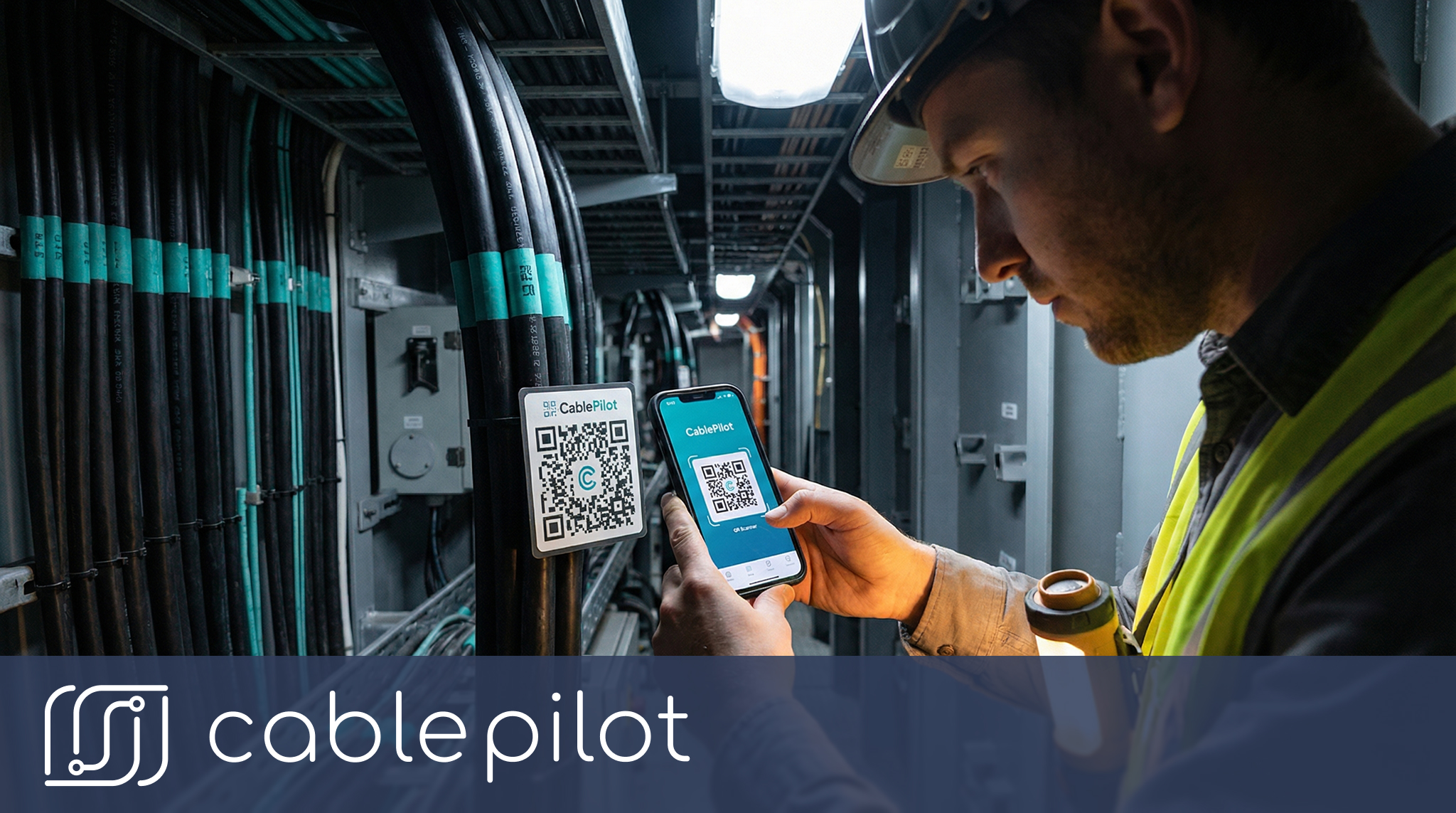
Every cable in Cable Pilot receives a unique QR code label generated from the project’s cable list. Installation crews use their smartphones to scan cable tags and update status with a single tap. Within seconds, this field update synchronizes to the cloud database and reflects across all dashboards.
When an electrician completes pulling a cable through a transit, they scan the QR code and select “Pulling Complete” from their smartphone. Project managers viewing the dashboard in the office immediately see that cable’s status change from yellow (in progress) to green (complete) on the progress monitoring charts. No paperwork. No evening reporting sessions. No data entry delays.
This QR-based workflow delivers several advantages for real-time dashboards:
Elimination of manual data entry: Field workers provide updates through simple scans rather than filling forms or notebooks. Data flows directly from execution to analytics without transcription errors or delays.
Timestamp precision: Every status change captures exact completion time, creating accurate historical records for schedule analysis and performance measurement.
Worker-level traceability: The system records which crew member performed each update, establishing clear accountability and enabling quality assurance tracking.
Offline capability with automatic sync: Crews can scan and update status even in areas without network coverage. Updates queue locally and synchronize automatically when connectivity returns, ensuring no data loss.
One-Click Status Updates Through the Mobile Application
Beyond QR scanning, Cable Pilot’s mobile application provides crews with intuitive interfaces for bulk updates and detailed progress reporting. Installation teams working through cable lists can update multiple cables simultaneously, dramatically accelerating data capture during high-volume work phases.
The application also enables photo documentation linked directly to specific cables. Quality assurance images of terminations, transit sealing work, or testing results attach to cable records and become instantly visible in dashboard drill-down views. This visual documentation supports both compliance tracking and troubleshooting when issues arise.
Supervisors appreciate the ability to filter cable lists by area, system, or contractor, then perform group updates reflecting completed work sessions. This functionality respects actual workflow patterns while maintaining the data transparency essential for effective dashboards.
Key Dashboard Features That Transform Project Visibility
Cable Pilot’s dashboard interface translates the continuous stream of field data into actionable intelligence through several interconnected visualization layers. Each dashboard component addresses specific monitoring needs while maintaining intuitive navigation that requires no specialized training.
Interactive Progress Charts by Area, System, and Contractor
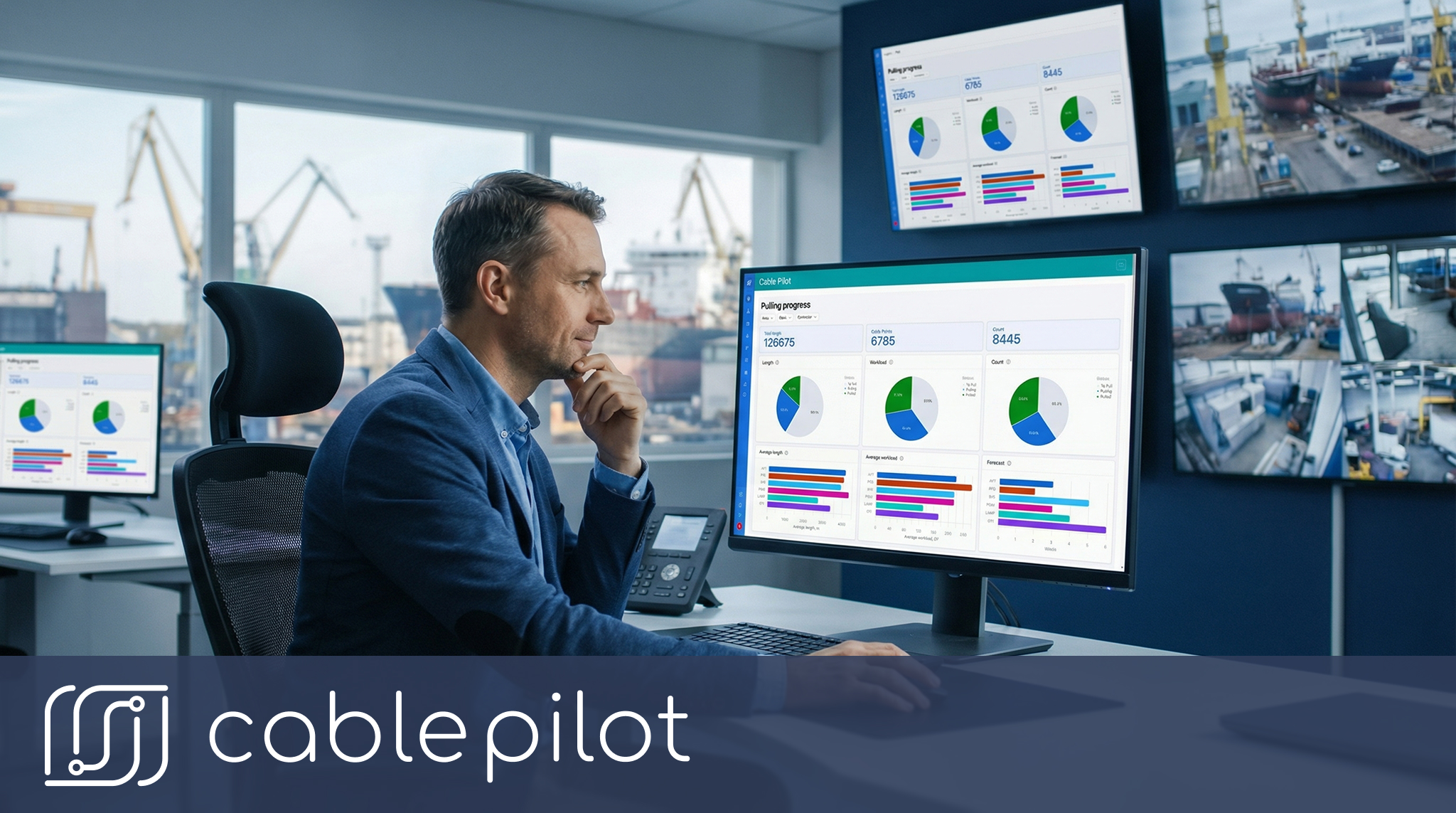
The primary dashboard presents installation progress through dynamic bar charts and progress indicators that update in real time as field crews log status changes. Project managers can instantly switch between different organizational views:
Area-based monitoring: Visual breakdown showing completion percentages for each vessel zone—Engine Room, Accommodation Blocks, Bridge, Cargo Holds, etc. This geographical view immediately highlights areas falling behind schedule.
System-based tracking: Progress visualization organized by electrical system—Navigation, Communications, Lighting, Power Distribution, Fire Detection, etc. System-focused views help discipline coordinators monitor their specific scope.
Contractor performance views: Separate progress tracking for each installation contractor, creating transparent accountability and enabling objective performance comparison across work packages.
Each progress bar incorporates color-coded status indicators that communicate at a glance:
- Green segments: Completed activities with verified status updates
- Yellow segments: Work in progress with recent activity
- Red segments: Behind schedule or blocked activities requiring attention
- Grey segments: Not yet started according to current plans
These visual indicators transform raw numbers into immediate situational awareness. A project manager opening the dashboard instantly identifies which areas need attention without studying detailed reports or spreadsheets.
Comprehensive Live Monitoring Across Installation Phases
Effective cable progress monitoring requires visibility across all installation phases, not just final completion. Cable Pilot’s dashboards track and visualize the full lifecycle:
Pulling progress monitoring: Real-time view of cable pulling completion by area and system. Identifies pulling bottlenecks before they delay downstream activities like testing and termination.
Testing status visibility: Separate tracking for insulation resistance testing, continuity verification, and other quality checks. Ensures quality assurance processes keep pace with installation progress.
Termination and connection tracking: Monitors both equipment-side and distribution-side connection completion. Highlights imbalances where one termination end lags behind the other, creating incomplete circuits.
Transit sealing compliance: Dedicated monitoring of watertight and fire-rated transit completeness. Critical for vessel certification and often a last-minute crisis area when tracking is inadequate.
This multi-phase visibility enables workflow optimization by revealing coordination issues. When the dashboard shows pulling far ahead of testing in a specific area, project managers can reallocate testing resources to prevent bottleneck formation. When termination lags significantly behind pulling completion, it signals potential contractor resource issues requiring immediate attention.
Drill-Down Capability for Granular Investigation
While high-level progress charts provide situational awareness, effective bottleneck detection often requires deeper investigation. Cable Pilot’s dashboards enable seamless drill-down from summary views to individual cable details.
Clicking any progress bar segment opens filtered cable lists showing exactly which cables contribute to that status category. A red segment indicating behind-schedule work in the Engine Room instantly expands to reveal the specific cable list requiring attention, complete with:
- Cable identification numbers and descriptions
- Scheduled versus actual completion dates
- Current status for each installation phase
- Assigned contractor and crew
- Recent activity history
- Attached photos and notes
This granular access transforms dashboards from passive monitoring tools into active problem-solving platforms. Project coordinators identify specific issues, communicate targeted corrective actions, and monitor resolution—all within the same interface.
Historical Trend Analysis and Performance Metrics
Real-time dashboards provide immediate situational awareness, but project coordination also requires understanding trends over time. Cable Pilot’s historical analytics layer tracks performance metrics across project duration:
Installation rate trending: Charts showing daily and weekly cable completion volumes by contractor, revealing productivity patterns and helping forecast completion dates.
Schedule compliance tracking: Comparison of planned versus actual progress, identifying persistent schedule variance patterns that require management intervention.
Quality metrics: Tracking first-time testing pass rates, rework frequency, and correction turnaround times. Declining quality indicators serve as early warnings for training needs or procedural issues.
Contractor performance benchmarking: Objective comparison of installation speed, quality metrics, and schedule adherence across different contractors, supporting performance discussions with evidence rather than subjective impressions.
These historical views support both project retrospectives and proactive management. Identifying that testing productivity drops every Thursday afternoon might reveal resource allocation issues. Recognizing that one contractor consistently completes terminations with fewer rework cycles than others suggests best practices worth replicating across teams.
Visual Quality Assurance and Compliance Documentation
Beyond progress tracking, Cable Pilot’s dashboards serve as centralized repositories for quality assurance evidence and compliance documentation. This capability addresses the critical need for verifiable records during classification society inspections, customer acceptance trials, and warranty investigations.
Photo Documentation Integration
Field crews capture quality assurance photos directly through the Cable Pilot mobile application, with each image automatically linking to specific cables. Common documentation scenarios include:
- Termination quality photos showing proper cable gland installation and conductor connections
- Transit sealing images documenting fire-rated stuffing installation before closeout
- Installation routing photos recording actual cable paths for as-built documentation
- Damage or non-conformance evidence supporting rework claims or issue escalation
These images appear instantly in the dashboard’s cable detail views, providing project managers and quality inspectors with visual verification of completed work without requiring site visits. During inspections, classification society surveyors can review representative samples of installation quality through the dashboard interface, dramatically accelerating approval processes.
The timestamp and geolocation data embedded in each photo creates an auditable trail proving when and where documentation occurred. This metadata becomes crucial during warranty disputes or incident investigations requiring reconstruction of installation timelines.
Compliance Tracking with Audit-Ready Logs
Regulatory compliance in shipbuilding demands comprehensive documentation proving that installation work followed approved procedures and quality standards. Cable Pilot’s dashboards automatically generate audit-ready logs capturing:
Complete status change history: Every cable status update, including timestamp, user identity, and previous status, creating a permanent record of work progression.
Testing result documentation: Insulation resistance values, continuity measurements, and pass/fail determinations linked to specific test dates and equipment.
Revision tracking: When cable lists change or corrections occur, the system logs all modifications with timestamps and user attribution, maintaining data integrity for audit purposes.
Access and activity logging: Security records showing who viewed or modified information, satisfying cybersecurity and data governance requirements for defense and commercial vessels.
During classification society inspections or customer acceptance reviews, project teams can generate comprehensive compliance reports directly from dashboard data. These reports demonstrate systematic quality assurance processes and provide the objective evidence required for certification approval.
Tangible ROI: How Real-Time Dashboards Improve Project Outcomes
The business value of Cable Pilot’s real-time dashboards extends beyond visibility improvements to deliver measurable returns on investment across multiple project dimensions.
Reduced Site Walks and Administrative Time
Traditional progress monitoring requires project managers and superintendents to conduct frequent site walks gathering status information firsthand. While valuable for relationship building and direct observation, these walks consume significant time when their primary purpose is data collection.
With Cable Pilot’s installation visibility, physical site visits become strategic rather than routine. Project managers can identify specific issues requiring personal attention through dashboard review, then conduct targeted site visits addressing those precise situations. One shipyard reported reducing project management site walk time by approximately 40% while simultaneously improving their understanding of actual project status.
Similarly, the elimination of manual report compilation saves substantial administrative effort. Project coordinators who previously spent hours consolidating contractor reports and generating weekly summaries now generate comprehensive status reports with several clicks. This efficiency gain redirects skilled personnel from data processing to value-added activities like schedule optimization and contractor coordination.
Faster Bottleneck Detection and Resolution
Perhaps the most significant ROI driver is early bottleneck identification enabling proactive intervention before schedule impacts cascade. Real-time dashboards reveal emerging issues within hours rather than days or weeks.
When pulling progress stalls in a specific area, the dashboard highlights this deviation immediately. Project coordinators can investigate and respond the same day—reallocating crews, addressing material shortages, or resolving access conflicts—rather than discovering the problem during next week’s progress meeting when recovery options are limited.
One vessel construction project using Cable Pilot identified a persistent testing bottleneck through dashboard trend analysis. Investigation revealed that testing equipment calibration delays were creating intermittent resource constraints. By addressing the calibration process and adding backup equipment, the project eliminated recurring delays that would have compounded throughout the installation schedule.
This acceleration of problem identification and resolution directly protects project schedules. Each bottleneck addressed within hours rather than days prevents schedule slippage that would otherwise propagate through dependent activities.
Enhanced Contractor Performance and Accountability
Data transparency creates objective foundations for contractor management and performance improvement. Cable Pilot’s contractor-specific dashboard views establish clear accountability while providing contractors themselves with tools for self-management.
Contractors appreciate access to dashboards showing their team’s progress compared to schedule commitments. This visibility enables their supervisors to identify and address productivity issues proactively rather than learning about schedule concerns from the shipyard during uncomfortable progress meetings.
For shipyard project managers, objective performance data supports constructive contractor discussions focused on problem-solving rather than blame assignment. When one contractor consistently lags behind schedule, dashboard evidence frames conversations around root cause analysis and corrective actions. When contractors dispute progress assessments or schedule responsibility, timestamped field data provides factual resolution.
Several shipyards report that dashboard visibility improves contractor performance simply through increased transparency. When contractors know their progress is visible in real time to yard management, work quality and schedule adherence improve without additional intervention—a behavioral benefit of systematic data transparency.
Improved Project Coordination Between Yards and Subcontractors
Modern shipbuilding increasingly involves complex coordination between shipyards and specialized electrical installation contractors. This coordination challenge multiplies when multiple contractors work simultaneously across different vessel areas.
Cable Pilot’s dashboards establish a common operating picture accessible to all authorized stakeholders regardless of organizational affiliation. Yard project managers, electrical superintendents, contractor supervisors, and testing coordinators all view the same real-time data, eliminating the confusion created by conflicting information sources.
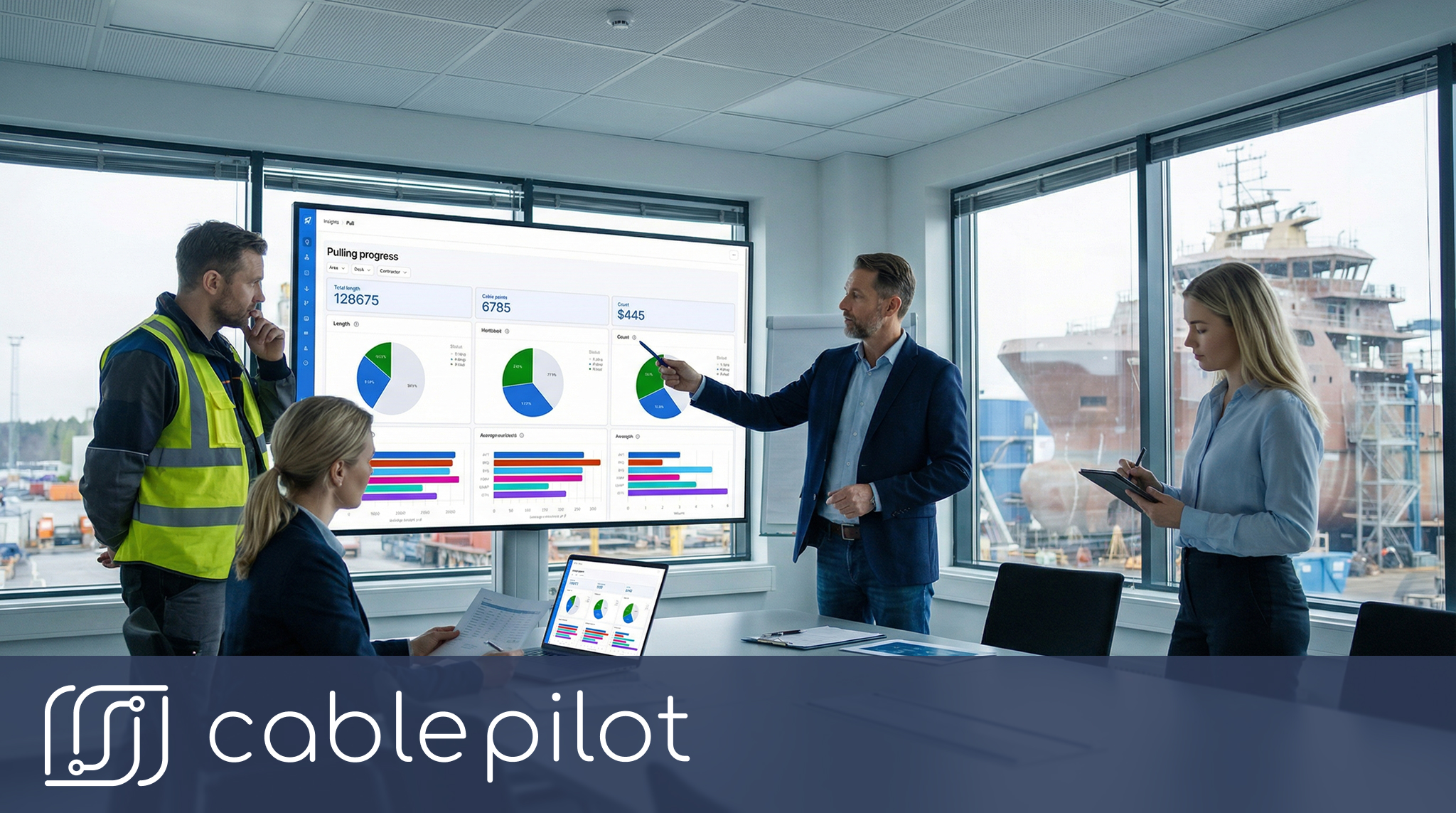
This shared visibility enables more effective coordination meetings focused on forward-looking problem solving rather than backward-looking status debates. When all participants review the same dashboard showing exactly which areas are on schedule, which are behind, and which face emerging issues, discussions quickly advance to resource allocation and corrective action planning.
The workflow optimization benefits extend to dependent activity coordination. When cable pulling teams complete work in an area, the dashboard immediately notifies testing crews that their work can proceed. When testing completion appears in dashboards, termination teams know which circuits are ready for connection. This just-in-time coordination reduces idle time and improves overall project flow.
Implementation Success: Making Dashboards Work for Your Project
Realizing the full potential of real-time dashboards requires more than software deployment. Successful Cable Pilot implementations follow several best practices that maximize adoption and value delivery.
Establishing Data Capture Discipline
Dashboard quality depends entirely on field data accuracy and timeliness. Successful projects establish clear expectations that status updates occur immediately upon work completion, not at the end of shifts or workdays. This requires:
Crew training and onboarding: Ensuring all installation workers understand QR scanning procedures and status update protocols before beginning work.
Supervisor accountability: Making crew leaders responsible for monitoring their teams’ update compliance and addressing gaps quickly.
Positive reinforcement: Recognizing crews that maintain excellent data discipline rather than only addressing non-compliance.
Projects that achieve this cultural shift find that real-time updating becomes second nature within two to three weeks, after which data quality remains consistently high with minimal ongoing management attention.
Configuring Dashboards for Stakeholder Needs
Cable Pilot’s flexible dashboard configuration enables customization for different user roles and priorities. Effective implementations develop several dashboard variations:
Executive summaries: High-level views for yard management showing overall project health, schedule compliance, and quality metrics without overwhelming detail.
Project manager workspaces: Comprehensive dashboards with quick access to area, system, and contractor views plus drill-down capability for detailed investigation.
Discipline coordinator interfaces: System-focused views for electrical, testing, and commissioning coordinators monitoring their specific scopes.
Contractor portals: Filtered dashboards showing each contractor only their assigned scope, supporting their internal management while maintaining appropriate information boundaries.
This stakeholder-specific configuration ensures each user receives relevant information at appropriate detail levels, maximizing dashboard value while minimizing information overload.
Integrating Dashboards into Project Routines
Real-time dashboards deliver maximum value when integrated into regular project management rhythms rather than used as occasional reference tools. Successful projects incorporate dashboard review into:
Daily coordination meetings: Brief dashboard walk-throughs highlighting overnight progress, identifying emerging issues, and assigning follow-up actions.
Weekly progress reviews: Comprehensive dashboard analysis examining trends, contractor performance, and schedule variance with broader stakeholder participation.
Exception management processes: Establishing triggers that generate automatic alerts when dashboard indicators cross predetermined thresholds, enabling rapid response to significant deviations.
Client and classification society meetings: Using dashboards to demonstrate project status and compliance evidence during formal reviews and inspections.
This systematic integration transforms dashboards from passive information displays into active project management tools that drive daily decision-making and coordination.
The Future of Installation Visibility: Predictive Analytics and Beyond
While Cable Pilot’s current real-time dashboards deliver substantial value, the continuous stream of detailed field data enables emerging analytical capabilities that will further revolutionize project coordination.
Predictive Completion Forecasting
Historical installation data combined with current progress rates enables predictive analytics forecasting completion dates with increasing accuracy. Machine learning models can identify patterns indicating that certain project areas will miss schedule milestones weeks before traditional planning methods would reveal these risks.
These predictive insights allow project managers to implement corrective actions while recovery options remain practical and cost-effective, transforming schedule management from reactive crisis response to proactive risk mitigation.
Automated Bottleneck Detection
Advanced analytics can automatically identify emerging bottlenecks by recognizing patterns in progress data across multiple installation phases. Rather than requiring project managers to manually compare pulling, testing, and termination progress rates, intelligent dashboards can highlight coordination issues automatically and even suggest resource reallocation strategies.
Cross-Project Learning and Benchmarking
As Cable Pilot deployments expand across multiple projects and shipyards, aggregated anonymized data enables industry benchmarking and best practice identification. Shipyards can compare their installation productivity rates, quality metrics, and workflow efficiency against industry patterns, identifying improvement opportunities and validating that their performance meets competitive standards.
Experience Project Clarity: See Cable Pilot’s Dashboards in Action
The transformation from data chaos to real-time installation visibility represents a fundamental shift in how modern shipbuilding projects manage electrical installation complexity. Cable Pilot’s dashboards convert the continuous flow of field updates into actionable intelligence that drives proactive decision-making, enables effective contractor coordination, and protects project schedules through early bottleneck detection.
For project managers tired of making critical decisions based on incomplete or outdated information, for superintendents who need objective contractor performance data, and for electrical coordinators seeking systematic quality assurance documentation, Cable Pilot’s real-time dashboards deliver the data transparency and workflow optimization required for modern vessel construction success.
The measurable benefits—reduced administrative time, faster issue resolution, improved schedule compliance, and enhanced contractor accountability—demonstrate clear return on investment that justifies adoption for electrical installation projects of any scale.
Ready to transform your electrical installation visibility? Contact our team to schedule a personalized demonstration of Cable Pilot’s real-time dashboards. See how instant cable progress monitoring, comprehensive quality assurance tracking, and intuitive data transparency can revolutionize coordination and schedule compliance for your next project. Discover why leading shipyards worldwide trust Cable Pilot to eliminate data chaos and unlock the project clarity required for on-time, high-quality vessel delivery.